

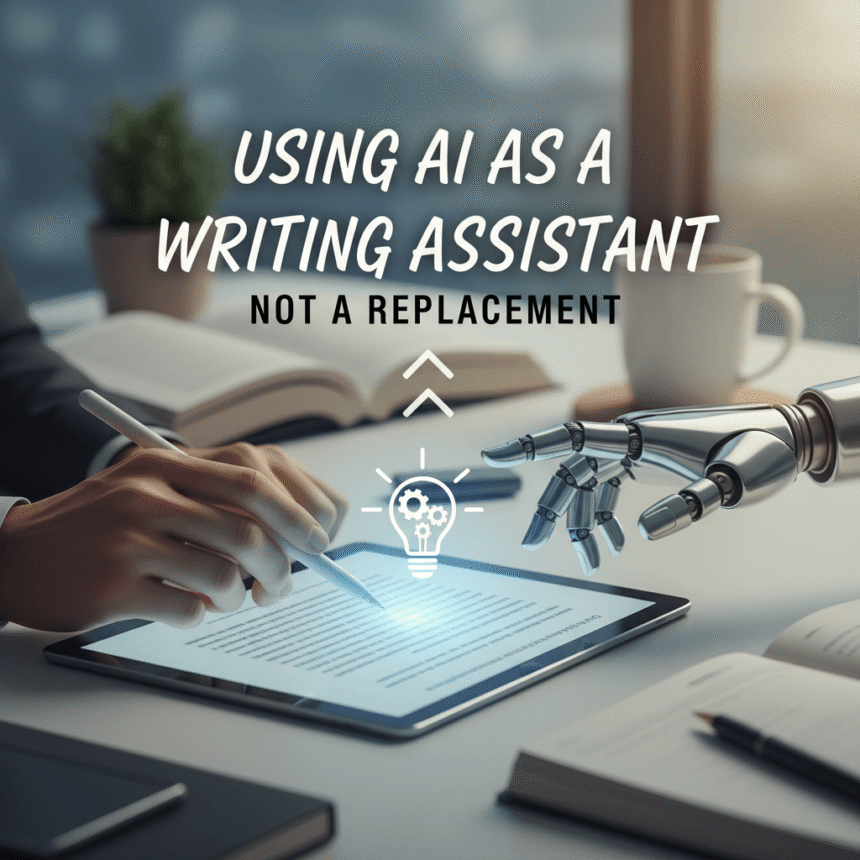

The world of writing is changing fast. For many of us, the arrival of artificial intelligence felt like a sudden shift in the weather. Some people worry that robots will take over the creative process, while others try to let the software do all the work with a single click.
However, the most successful writers in 2026 aren’t the ones being replaced by technology. Instead, they are the ones using it as a powerful assistant. When you treat AI as a partner rather than a replacement, you keep the human heart of your story while getting rid of the heavy lifting.
The Role of the Human Writer
Writing is more than just putting words in a row. It is about sharing a unique perspective, a personal story, or a specific emotion. AI can mimic patterns, but it does not have “lived experience.” It has never felt the sting of a cold winter morning or the joy of a hard-earned success.
Your job as the human writer is to provide the soul of the piece. You are the one who decides the message, the tone, and the “why” behind the article. If you let a machine do 100% of the work, you lose that connection with your readers. People read blogs to connect with other people, not to read a database of facts.
How to Use AI as Your Assistant
Think of AI as a very fast intern who has read every book in the library but has no common sense. Here are the best ways to put that assistant to work:
- Beating Writer’s Block: The hardest part of writing is the blank screen. You can ask an AI for ten ideas for a blog post or a rough outline to get you started. This gives you a foundation to build upon.
- Research and Summarization: If you have a long report to read, an assistant can summarize the key points for you. This saves you hours of reading and lets you focus on the creative part of the project.
- Polishing and Grammar: AI is excellent at finding small mistakes or suggesting a better way to phrase a clunky sentence. It acts like a second pair of eyes that never gets tired.
- Adapting Your Tone: Sometimes you might write something that sounds too formal. You can ask your assistant to “make this sound more friendly” or “shorten these paragraphs for mobile readers.”
The Danger of the “Easy Button”
It is tempting to just tell an AI to “write a blog post about gardening” and hit publish. But there are risks to this shortcut. AI can sometimes make up facts, a problem known as hallucination. It can also produce “fluff”—sentences that sound nice but don’t actually say anything new.
When you use AI as a replacement, your content starts to look like everyone else’s. It becomes generic. To stand out in a world full of content, your work needs a “signature.” That signature comes from your edits, your opinions, and your specific choice of words.
A Better Workflow for 2026
A high-quality writing process usually looks like this:
- Human: Choose the topic and the main “big idea.”
- AI: Generate an outline and suggest some interesting facts.
- Human: Write the actual draft using your own voice and stories.
- AI: Review the draft for clarity and suggest improvements.
- Human: Fact-check every claim and do a final “vibe check” to ensure it sounds like you.
Finding the Balance
The goal isn’t to work harder; it’s to work smarter. By using AI to handle the repetitive and technical parts of writing, you free up your brain to do what it does best: think, feel, and create. Technology should be the wind in your sails, not the captain of your ship.
Keep your hands on the wheel, use the tools available to you, and remember that your voice is the only one of its kind in the world.