

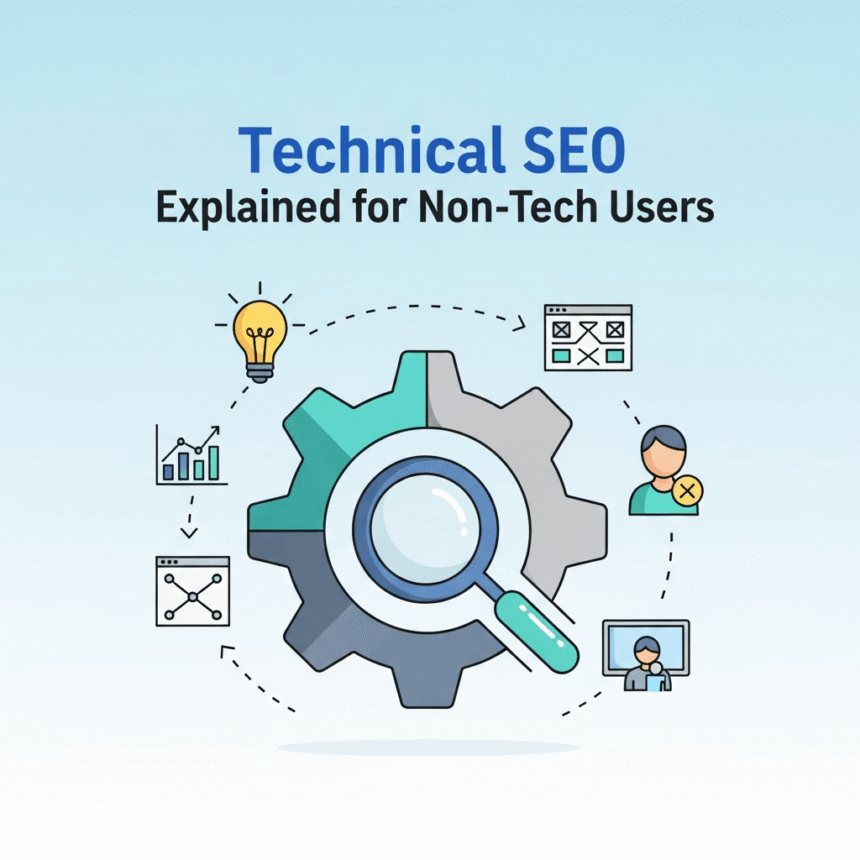

Most people think SEO is just about using the right keywords or writing great content. While those things matter, they are only half the battle. Imagine building a beautiful house with high-end furniture but forgetting to put a front door on it. No matter how nice the inside is, nobody can get in.
Technical SEO is the foundation of that house. It ensures that search engines like Google can find, read, and understand your website. You do not need to be a computer programmer to understand the basics. Here is a simple guide to help you get your site in top shape.
1. Think of Google as a Librarian
To understand technical SEO, think of Google as a librarian trying to organize the world’s largest library. To do their job, the librarian needs to:
- Crawl: Discover that your book exists.
- Index: Read the book and put it on the right shelf.
- Rank: Decide if your book is the best answer when someone asks a question.
If your website has technical errors, it is like locking the library doors or printing your book in a language the librarian cannot read.
2. Speed Is Everything
Nobody likes a slow website. If a page takes more than a few seconds to load, most people will leave. Search engines know this and will prioritize faster sites.
You can improve speed by:
- Resizing images: Huge photo files are the most common reason for slow sites.
- Using a good host: Your “landlord” on the internet matters.
- Removing unnecessary tools: Every extra plugin or fancy animation adds weight to your site.
3. Mobile Friendliness
More people browse the internet on phones than on computers today. If your website looks “broken” or is hard to navigate on a smartphone, search engines will likely hide it from mobile search results. A technical SEO “must” is ensuring your site is responsive, which just means it automatically changes its shape to fit any screen.
4. Making Sure Google Can Crawl Your Site
There are two small files that act as a map for search engines:
- Sitemap: This is a literal list of every page on your site. It tells Google, “Here is everything I have.”
- Robots.txt: This tells Google which parts of your site it should stay out of, like your private login pages.
Without these, Google might miss your most important pages.
5. Security (HTTPS)
You might notice a little padlock icon next to a website address in your browser. This means the site is secure. Using “HTTPS” instead of “HTTP” protects your visitors’ data. Search engines take security very seriously and will often warn users to stay away from sites that do not have this basic protection.
6. Fix Broken Links
A broken link leads to a “404 Error” page. This is a dead end for both users and search engines. Regularly checking your site for these dead ends shows Google that you are maintaining your “digital house” properly.
Summary
Technical SEO is not about writing code. It is about making sure your website is fast, safe, and easy for a robot to read. When you make things easier for search engines, you ultimately make them better for your human visitors too.