


If you want people to find your website, you need to understand how they search. Every time someone types a phrase into a search engine, they are using keywords. But not all keywords are the same.
In the world of Search Engine Optimization (SEO), we generally split these phrases into two groups: short-tail and long-tail keywords. Choosing the right one can be the difference between a website that stays hidden and one that gets thousands of visitors.
What Are Short-Tail Keywords?
Short-tail keywords are very brief search terms. Usually, they are only one or two words long. Because they are so broad, they cover a massive range of topics.
Examples of short-tail keywords include:
- Shoes
- Coffee
- Digital marketing
- Yoga
The Pros and Cons
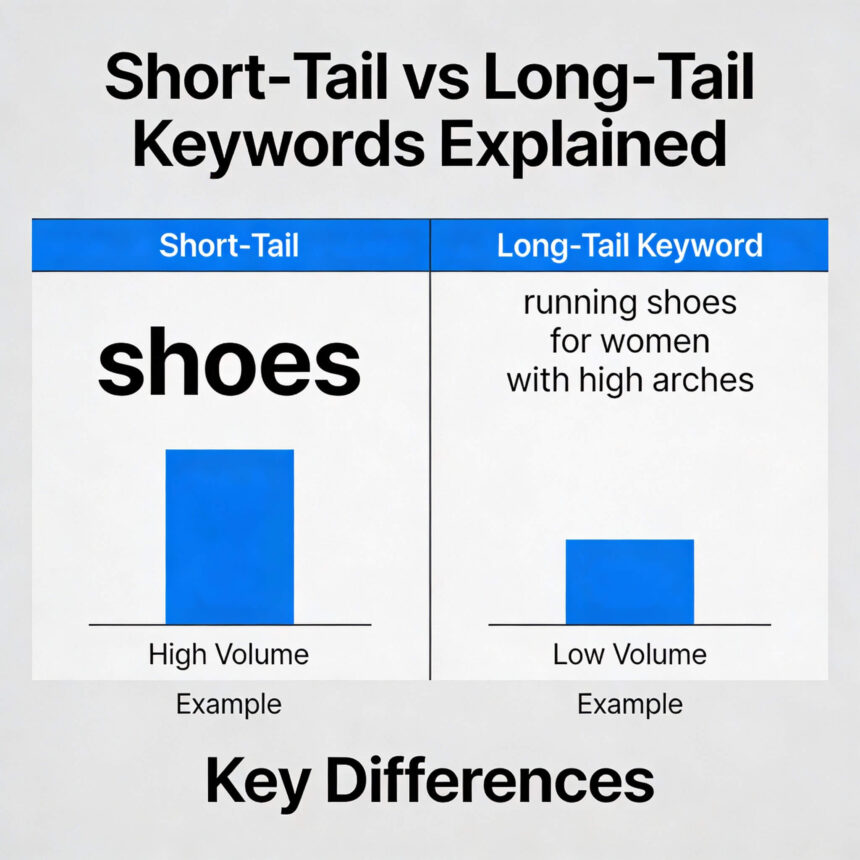
The biggest advantage of short-tail keywords is volume. Millions of people search for the word “shoes” every single day. If you rank at the top for that word, you will get a massive amount of traffic.
However, the downside is competition. Every big brand in the world is trying to rank for those same broad terms. It is very difficult and expensive to show up on the first page. Additionally, these keywords are vague. If someone searches for “shoes,” you don’t know if they want to buy running sneakers, look at high heels, or find a repair shop.
What Are Long-Tail Keywords?
Long-tail keywords are longer, more specific phrases. They usually contain three or more words. Instead of being broad, they focus on a very specific intent.
Examples of long-tail keywords include:
- Red running shoes for marathon training
- Best organic coffee beans for espresso
- How to start digital marketing for small businesses
- Beginner yoga classes in downtown New York
The Pros and Cons
Long-tail keywords have much lower search volume. Maybe only 50 people a month search for that specific coffee bean phrase instead of 500,000 searching for “coffee.”
But the benefit is conversion. When someone is specific, they usually know exactly what they want. If your website provides the exact answer to their specific question, they are much more likely to stay on your site or make a purchase. They are also much easier to rank for because fewer websites are competing for that exact phrase.
Comparing the Two
To help you decide which to use, let’s look at how they perform in three main areas.
1. Competition
Short-tail keywords are like trying to win a race against Olympic athletes. It takes years of work and a huge budget. Long-tail keywords are like running a local race in your neighborhood. You have a much better chance of winning.
2. Search Intent
Short-tail keywords have “low intent.” You aren’t sure what the user wants. Long-tail keywords have “high intent.” You know exactly what the user is looking for, which makes it easier to give them the right content.
3. Conversion Rate
Because long-tail keywords match the user’s needs more closely, they almost always have a higher conversion rate. People searching for specifics are usually further along in their journey and ready to take action.
| Feature | Short-Tail Keywords | Long-Tail Keywords |
| Length | 1 to 2 words | 3+ words |
| Search Volume | Very High | Low |
| Competition | Very High | Low |
| Conversion Rate | Low | High |
| Focus | Broad | Specific |
Which Should You Use?
The best strategy is usually a mix of both, but it depends on where your website is right now.
If you have a new website, you should focus almost 100% on long-tail keywords. This allows you to build “authority” by winning smaller battles. Once you start ranking for specific phrases, search engines will begin to trust you more.
If you have an established website with a lot of authority, you can start targeting those competitive short-tail keywords while still using long-tail phrases to capture specific customers.
How to Find Long-Tail Keywords
Finding these gems is easier than you think. You can start by using the “People Also Ask” section on search engine result pages. You can also look at the suggested searches at the bottom of the page. These are real phrases people are using right now.
Think about the problems your audience has. Instead of targeting “fitness,” try targeting “how to lose weight without a gym membership.” That shift in focus will bring you visitors who are looking for exactly what you have to offer.
Summary
Short-tail keywords bring the crowd, but long-tail keywords bring the customers. By understanding the balance between the two, you can create a content strategy that not only brings people to your site but ensures they are the right people.