

Starting your journey into Search Engine Optimization (SEO) can feel like walking into a maze. There are so many technical terms and shifting rules that it is easy to get lost. However, SEO is simply the process of making your website better for both search engines and the people who use them.
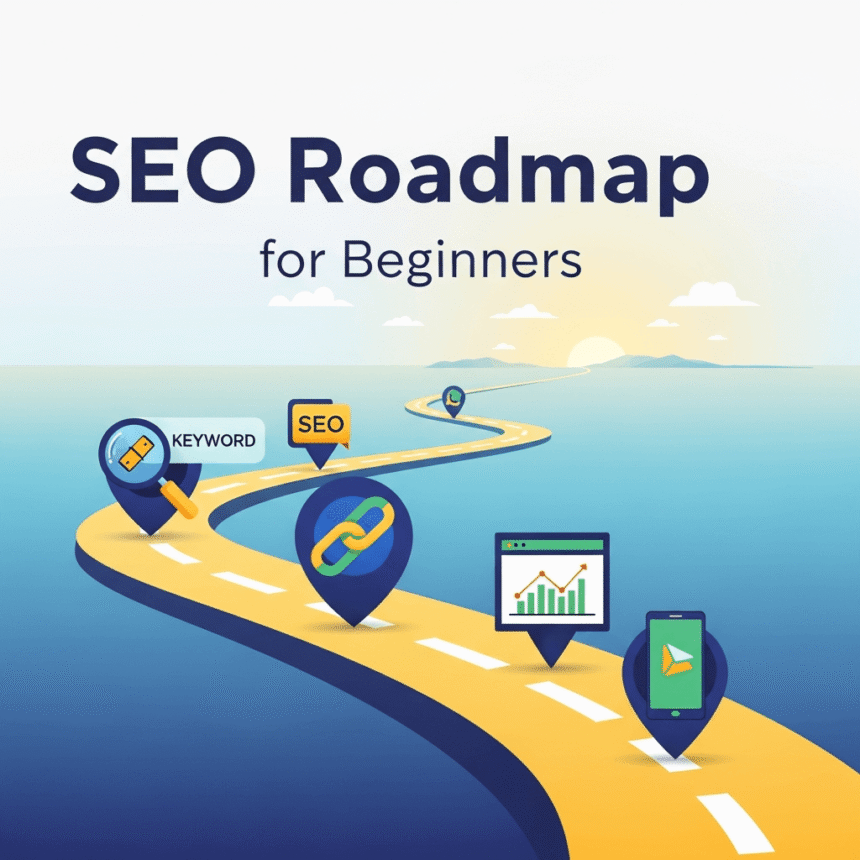
This roadmap will give you a clear path to follow, taking you from a beginner to someone who understands how to grow a website’s presence online.
Step 1: Understanding Keyword Research
Keywords are the bridge between what people are searching for and the content you provide. If you don’t use the right keywords, your target audience will never find you.
Find Your Seed Keywords: Think about the main topics of your website. If you run a bakery, your seed keywords might be “cupcakes” or “sourdough bread.”
Use Research Tools: Use free tools like Google Keyword Planner or search suggestions to see what specific questions people are asking.
Focus on Intent: Are people looking to buy something, or are they just looking for information? Choose keywords that match what your page actually offers.
Step 2: Master On-Page SEO
On-page SEO is about everything you can control directly on your website. This tells search engines exactly what your page is about.
Title Tags: This is the headline that appears in search results. Keep it under 60 characters and include your main keyword.
Meta Descriptions: This is the short summary under the title. It should be catchy and encourage people to click.
Header Tags (H1, H2, H3): Use these to organize your content. Your H1 should be your main title, while H2s and H3s act as subheadings for different sections.
Image Alt Text: Search engines cannot “see” images, so you must describe them in the alt text.
Step 3: Technical SEO Basics
Technical SEO ensures that search engine “crawlers” can access and index your site without any trouble. You don’t need to be a coder to handle the basics.
Site Speed: If your site takes longer than three seconds to load, visitors will leave. Compress your images and use a fast hosting provider.
Mobile Friendliness: Most people browse the web on their phones. Ensure your site looks and works great on mobile devices.
HTTPS: Ensure your site is secure. A secure site has a padlock icon next to the URL, which builds trust with visitors and search engines.
Step 4: Create High-Quality Content
In the world of SEO, content is king. Search engines want to reward websites that provide value.
Be Original: Do not copy others. Share your unique perspective or experience.
Readability: Use short sentences and simple words. Break up long paragraphs so the text is easy to scan.
Update Regularly: Search engines love fresh content. Even updating old posts with new information can give you a boost.
Step 5: Build Your Authority (Off-Page SEO)
Off-page SEO is mostly about building “backlinks.” A backlink is when another website links to yours. Think of it as a vote of confidence.
Guest Posting: Write helpful articles for other reputable websites in your niche.
Social Sharing: Share your content on social media. While social media likes aren’t a direct ranking factor, they help more people see your work.
Networking: Build relationships with other bloggers or business owners. They are more likely to link to you if they know and trust you.
Step 6: Track Your Progress
You cannot improve what you do not measure. Use tools like Google Search Console to see which keywords are bringing people to your site and if there are any errors you need to fix.
SEO is a marathon, not a sprint. It takes time to see results, but if you follow this roadmap consistently, you will see your traffic grow.