

When most people think about SEO, they immediately think about getting links from other websites. While those external links are important, many site owners overlook the power they already have within their own pages. Internal authority building is the process of using your own content to tell search engines which pages are the most important.
What is Internal Authority?
Internal authority is the “ranking power” that lives inside your website. Think of your website like a library. If every book in the library points to one specific reference guide, you will naturally assume that guide is the most important resource in the building.
In the world of SEO, this is often called “Link Equity” or “Link Juice.” When you link from one page on your site to another, you are passing a small amount of trust and authority to that second page.
Why Internal Links Matter
Internal links do more than just help people click around. They serve three main purposes:
- Helping Search Engines Crawl: Search engine bots follow links to find new content. If a page has no links pointing to it, the bots might never find it.
- Defining Hierarchy: Links help you establish a structure. You can show search engines that your “Ultimate Guide” is more significant than a short “Quick Tip” post.
- Distributing Power: You can take the “power” from a page that ranks very well and share it with a new page that needs a boost.
How to Build Internal Authority
1. Use a Hub and Spoke Model
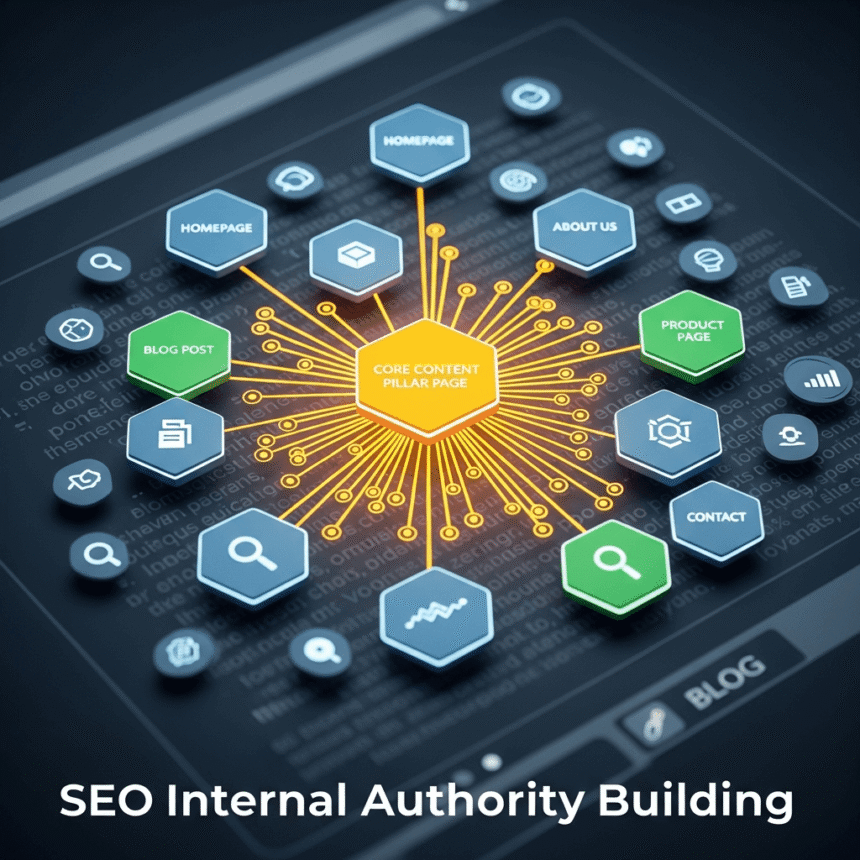
This is one of the most effective ways to build authority. You create one massive, high-quality “Hub” page about a broad topic. Then, you create several smaller “Spoke” posts that dive into specific details. Every spoke should link back to the hub, and the hub should link out to every spoke. This tells search engines that your hub is the definitive authority on that subject.
2. Optimize Your Anchor Text
Anchor text is the clickable text in a hyperlink. Instead of using generic phrases like “click here” or “read more,” use descriptive keywords. If you are linking to a post about organic gardening, make your anchor text “organic gardening tips.” This gives search engines context about what the destination page is about.
3. Link from High-Traffic Pages
Check your analytics to see which pages get the most visitors. These pages usually have the most “authority.” By adding a link from a popular old post to a struggling new post, you can pass some of that established strength to the new content.
4. Keep Links Relevant
Only link to pages that actually help the reader. If you are writing about healthy recipes, don’t link to a post about car repairs just for the sake of a link. Search engines reward relevance. If the link makes sense for a human, it usually makes sense for SEO.
Common Mistakes to Avoid
- Linking Too Much: If a page has hundreds of links, the power of each individual link is diluted. Keep it natural.
- Deep Burying: If a page is more than three clicks away from the homepage, it will struggle to gain authority. Keep your important pages easy to find.
- Broken Links: A link that leads to a “404 Not Found” error is a dead end for both users and search bots. Regularly check your site to fix these.
Final Thoughts
Internal authority building is one of the few SEO strategies you have 100 percent control over. You don’t have to wait for someone else to link to you to start growing your rankings. By organizing your links strategically and focusing on the user experience, you can turn your website into an organized, authoritative machine.