

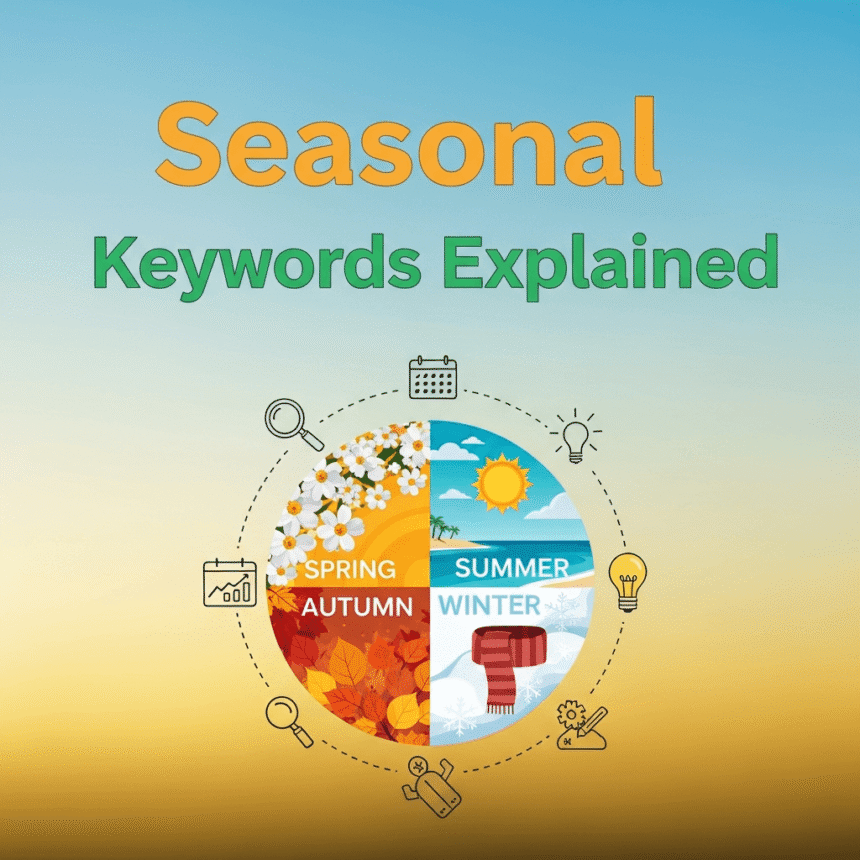

If you have ever wondered why some websites get a massive spike in traffic during December while others peak in the middle of July, you have likely seen the power of seasonal keywords in action. Understanding how these keywords work is a game-changer for anyone trying to grow their online presence.
What Are Seasonal Keywords?
In simple terms, seasonal keywords are search terms that people use more frequently during specific times of the year. Unlike “evergreen” keywords, which people search for consistently year-round (like “how to tie a tie”), seasonal keywords follow a predictable pattern based on the calendar.
Think of it like a retail store. In the summer, they sell swimsuits. In the winter, they sell heavy coats. Search engines work the same way. The intent of the user changes as the seasons, holidays, and events shift.
Types of Seasonality
Seasonality isn’t just about the four seasons of the year. It generally falls into two main categories:
Time-Based Seasonality
This refers to the traditional seasons: Spring, Summer, Autumn, and Winter. For example:
“Best sunscreens for kids” (Peaks in Summer)
“How to plant tulip bulbs” (Peaks in Spring)
Event-Based Seasonality
This revolves around holidays, annual events, or cultural moments. For example:
“Last minute gift ideas” (Peaks in December)
“Back to school supplies” (Peaks in August)
“Super Bowl snack recipes” (Peaks in February)
Why Should You Care?
You might think it is better to only focus on keywords that bring in traffic all year long. While evergreen content is the “bread and butter” of your site, seasonal keywords are the “growth hormone.”
1. Massive Traffic Spikes
During peak times, the volume of searches for these terms can be astronomical. If you rank well for a seasonal term, you can get more visitors in one week than you might get in three months otherwise.
2. High Intent to Buy
Many seasonal keywords are tied to shopping events. When someone searches for “Black Friday deals on laptops,” they aren’t just browsing. They have their credit card ready.
3. Staying Relevant
Updating your site with seasonal content shows your audience (and search engines) that your website is active and up to date.
How to Find Your Seasonal Keywords
The best tool for this job is often Google Trends. It allows you to see the search interest for a specific term over several years.
If you see a graph that looks like a series of mountain peaks at the same time every year, you have found a seasonal keyword. If the line is relatively flat, it is evergreen.
How to Plan Your Content
The secret to winning with seasonal keywords is timing. You cannot publish a post about “Halloween costume ideas” on October 30th and expect to see results. Search engines need time to find, index, and rank your content.
A good rule of thumb is the 60-day rule. Try to publish your seasonal content about two months before the peak interest begins. This gives you enough time to build some momentum so that you are sitting at the top of the results when the search volume explodes.
Summary
Seasonal keywords are a powerful tool for driving targeted traffic to your site. By identifying the times of year when your audience is most active and preparing your content in advance, you can take advantage of the natural rhythms of the internet.