

In the world of search engine optimization, or SEO, backlinks are like votes of confidence. When one website links to another, it tells search engines that the content is valuable. However, not all votes are equal. If you want your website to grow and stay safe from penalties, you must understand the difference between natural backlinks and spam backlinks.
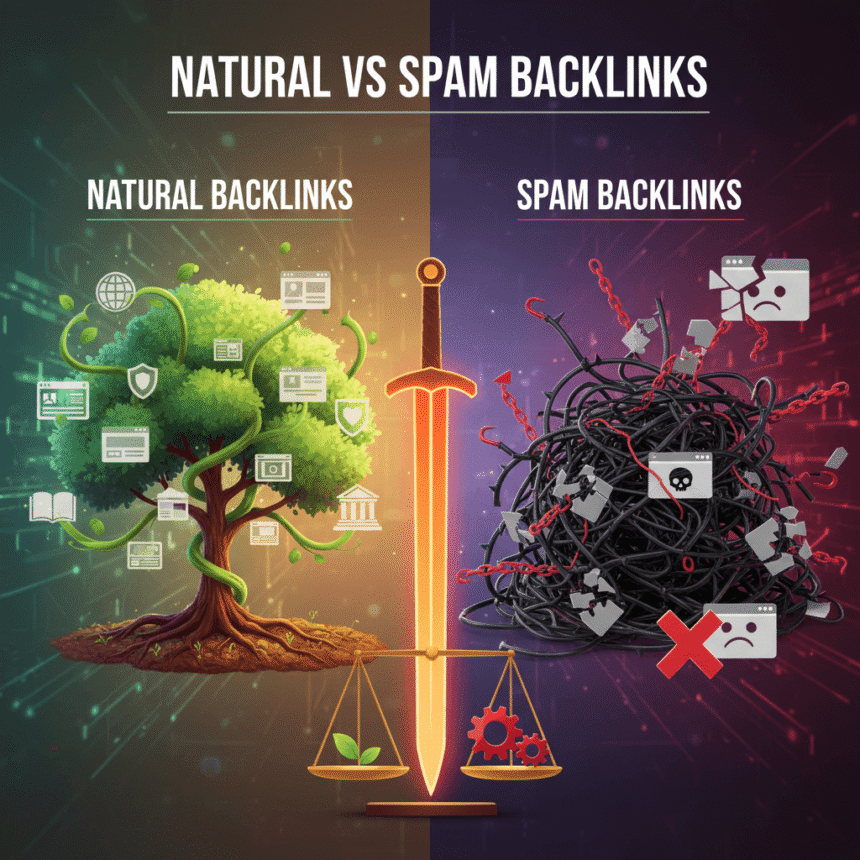
What are Natural Backlinks?
A natural backlink happens organically. This means another website owner found your content useful, helpful, or interesting and decided to link to it without you asking them to do so.
These links are the “gold standard” of SEO. They usually come from websites that are related to your industry or topic. For example, if you write a great recipe and a food blogger links to it, that is a natural backlink.
Characteristics of Natural Backlinks:
- Relevance: The linking site is in the same niche as yours.
- Trustworthy Sources: The links come from established, well-known websites.
- Varied Anchor Text: The clickable text used for the link looks natural, such as your brand name or the title of your article.
- Added Value: The link helps the reader find more information.
What are Spam Backlinks?
Spam backlinks are low-quality links created solely to try and trick search engines into ranking a site higher. These links are often generated by bots or bought in bulk from “link farms.”
In the past, having thousands of these links might have helped a site rank better. Today, search engines are much smarter. They can easily spot these patterns. Instead of helping your site, spam links can lead to your website being hidden from search results entirely.
Characteristics of Spam Backlinks:
- Irrelevant Content: You might get a link from a gambling site even though your blog is about gardening.
- Over-Optimized Anchor Text: Using the exact same keyword for every single link.
- Hidden Links: Links that are the same color as the background or placed in the footer of a completely unrelated site.
- Adult or Malicious Sites: Links coming from “bad neighborhoods” of the internet.
Why the Difference Matters
Search engines like Google want to provide the best experience for their users. They reward websites that provide genuine value.
If your backlink profile is full of natural links, search engines view you as an authority. Your rankings will likely go up over time and stay there.
On the other hand, if your profile is full of spam, it sends a red flag. Search engines may see this as an attempt to “game the system.” This can result in a manual penalty or an algorithmic filter that drops your traffic overnight.
How to Get More Natural Backlinks
Building natural links takes time and effort, but the results are worth it. Here are a few simple ways to start:
- Create High-Quality Content: People only link to things that are worth sharing. Focus on deep-dive guides, original research, or unique opinions.
- Guest Posting: Write articles for other reputable blogs in your niche. This allows you to introduce yourself to a new audience and get a high-quality link in return.
- Use Infographics: Many people love sharing visual data. If you create a helpful chart, others may embed it on their site and link back to you.
- Fix Broken Links: Find websites that have broken links and suggest your content as a replacement.
How to Handle Spam Backlinks
Sometimes, you might get spam links that you didn’t ask for. This is often called “Negative SEO.” Don’t panic. Search engines are generally good at ignoring these.
However, if you notice a massive influx of thousands of bad links, you can use the “Disavow Tool.” This is a way of telling search engines, “I don’t want these specific links to count toward my site’s reputation.”
Conclusion
The secret to long-term success online is quality over quantity. One natural link from a respected website is worth more than ten thousand spam links. By focusing on creating great content and building real relationships with other creators, you will build a backlink profile that helps your site thrive for years to come.