

Think of your website like a library. If you walk in and books are scattered randomly on the floor, you will never find what you need. A library works because it has a system: sections for fiction, history, and science, with further subsections for specific topics.
Keyword mapping is the blueprint for that library. It is the process of assigning specific keywords to specific pages on your site. When done correctly, it ensures that both your visitors and search engines understand exactly what your website is about.
What is Keyword Mapping?
Keyword mapping is the bridge between your research and your website’s actual design. After you find a list of terms your audience is searching for, you have to decide where those terms live.
Instead of just guessing which words to use on which page, you create a map. This map tells you:
Which page targets which primary keyword.
Which supporting keywords belong on that same page?
How pages should link to one another to create a logical flow.
Why Your Site Structure Needs a Map
Without a map, you risk a common problem called keyword cannibalization. This happens when multiple pages on your site try to rank for the same word. This confuses search engines because they don’t know which page is the “authority,” often resulting in lower rankings for both.
A solid map helps you:
Prevent Duplicate Content: Each page has a unique purpose.
Improve User Experience: Visitors find what they want faster.
Spread Authority: You can strategically link from high-traffic pages to newer ones.
How to Build Your Keyword Map
1. Group Your Keywords by Intent
Start with your list of keywords. Group them based on what the user wants. Are they looking for information? Are they ready to buy? For example, “how to bake a cake” and “best chocolate cake recipe” have similar intent and can likely live on the same page.
2. Create a Hierarchy
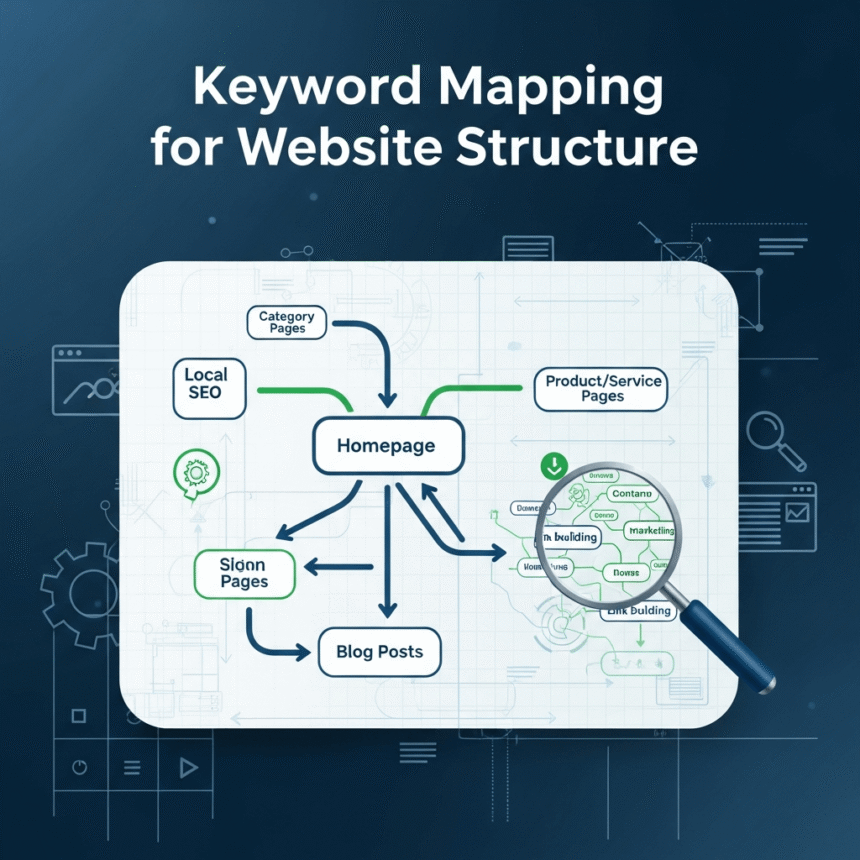
Every site has a “Home” page. Under that, you have “Category” pages, and under those, you have “Product” or “Post” pages.
The Home Page: Targets your broadest, most competitive term.
Category Pages: Target medium-sized topics (e.g., “Men’s Shoes”).
Individual Posts: Target specific, long-tail keywords (e.g., “Red waterproof running shoes for men”).
3. Match Keywords to URLs
In a simple spreadsheet, list your planned URLs in one column and your chosen keywords in the next. This visual guide ensures that every important word has a home and no two pages are fighting for the same spot.
The Logical Flow
A well-mapped site usually follows a “hub and spoke” model. The Hub is a big, deep guide about a broad topic. The spokes are smaller articles that dive into specific details of that topic.
By linking the spokes back to the hub, you tell search engines that the hub page is the most important resource on your site for that subject.
Final Thoughts
Keyword mapping isn’t just a one-time task for new sites. It is a vital health check for existing ones. By organizing your content around how people actually search, you make your site more professional and much easier to navigate. For more information, visit AfriTeacher