
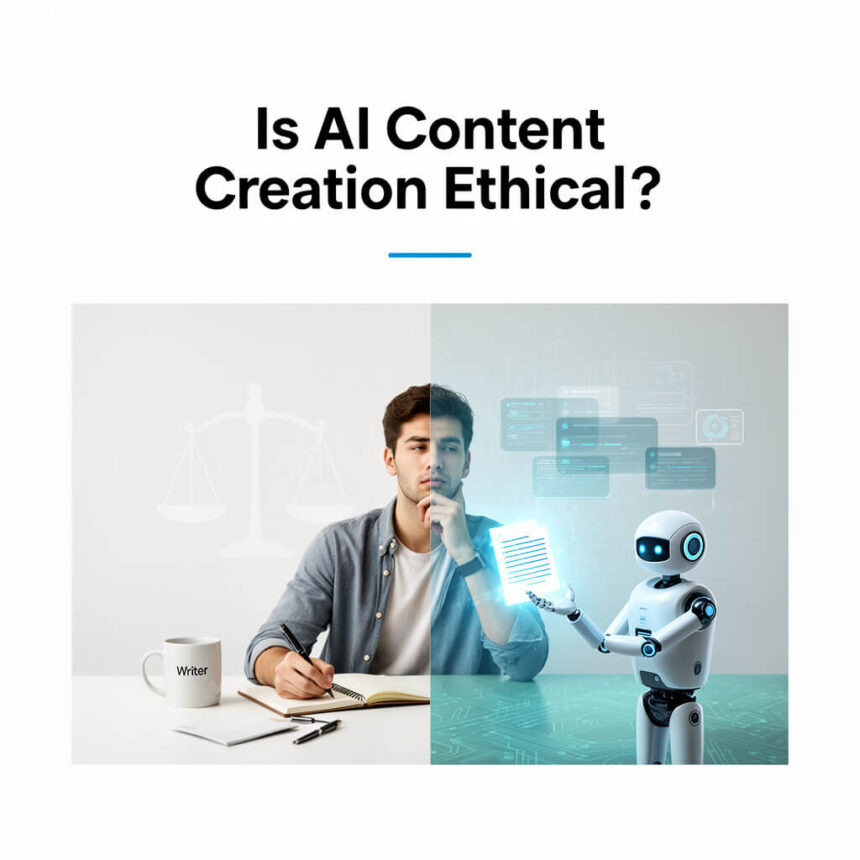

The rise of artificial intelligence has changed how we make almost everything, from art to essays. You can now type a short prompt into a computer and receive a full article or a digital painting in seconds. This speed is exciting, but it also raises a big question: Is it ethical to use AI to create content?
There is no simple “yes” or “no” answer. Instead, the ethics of AI depend on how we use the technology and how we treat the people who created the data that AI learned from in the first place.
The Problem of Ownership and Consent
AI models do not come up with ideas out of thin air. They are trained on billions of pieces of human-created data, including books, articles, and photos. Most of the time, the original creators did not give permission for their work to be used this way.
Many artists and writers feel that AI is a form of digital theft. When an AI generates an image in the style of a specific living painter, that painter does not get paid or credited. This leads to a major ethical dilemma: if an AI uses your hard work to learn how to replace you, is that fair?
Accuracy and the Risk of Misinformation
Another ethical concern is “hallucination.” This happens when an AI confidently states a fact that is completely false. Because AI predicts the next likely word in a sentence rather than understanding the truth, it can spread misinformation very quickly.
If a blogger uses AI to write medical or legal advice without checking the facts, they could cause real harm to their readers. Ethically, the responsibility always lies with the human publisher to ensure that what they post is true and safe.
Transparency: Should You Tell Your Readers?
Most people agree that honesty is a key part of ethics. If a reader thinks they are connecting with a human’s personal experience but the text was actually written by a machine, they might feel cheated.
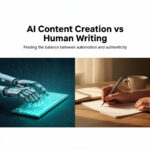
Being transparent about AI use helps build trust. Many creators choose to use AI as a “co-pilot” for brainstorming or outlining while doing the actual writing themselves. This balance allows for efficiency without losing the human touch that readers value.
The Positive Side: Accessibility and Innovation
It is also important to look at the ethical benefits. AI can help people with disabilities or language barriers express themselves more clearly. A person with a brilliant idea who struggles with grammar or technical drawing can use AI to bring their vision to life. In this sense, AI can be a tool for inclusion, giving a voice to those who might otherwise be ignored.
How to Use AI Ethically
If you want to use AI for your content while staying on the right side of ethics, consider these steps:
- Fact-check everything: Never assume the AI is right. Verify names, dates, and technical data.
- Add your unique voice: Use AI for the “bones” of an article, but add your own stories and opinions to the “meat.”
- Be honest: If AI did a large portion of the work, consider adding a small disclaimer for your audience.
- Respect creators: Avoid prompts that specifically try to mimic the style of a single artist or writer without their consent.
Final Thoughts
AI content creation is not inherently “evil,” but it is powerful. Like any powerful tool, it requires a human with a strong moral compass to guide it. By focusing on transparency, accuracy, and respect for human creativity, we can use AI to enhance our work rather than replace the value of human thought.