
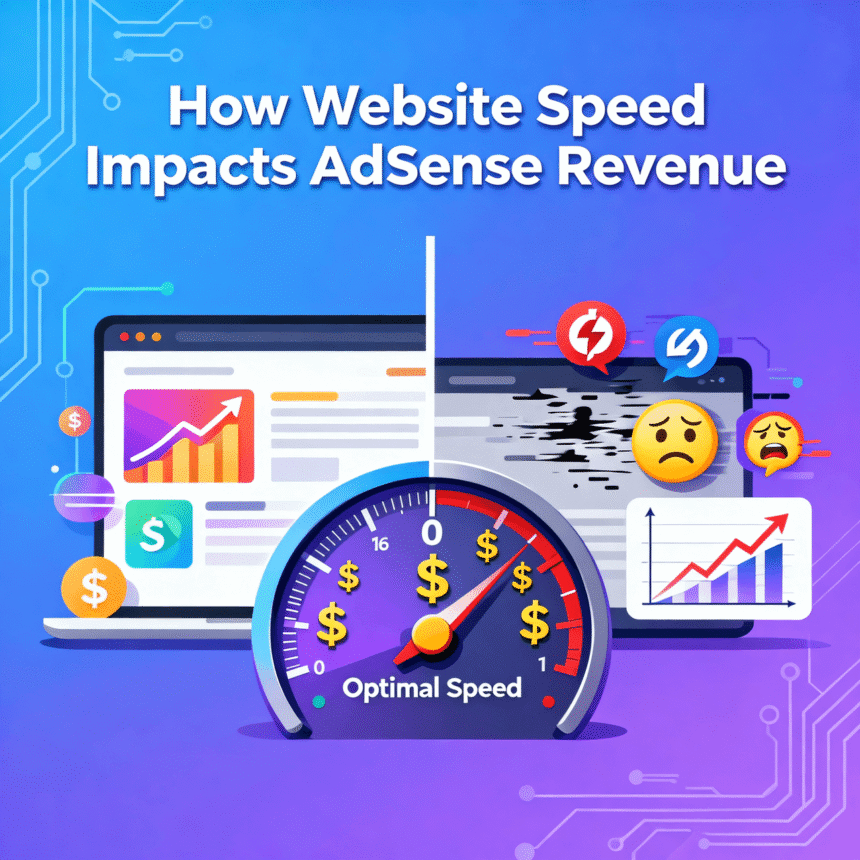

In the world of online publishing, “time is money” is more than just a phrase. It is a technical reality. If you run a website and show ads, you might spend hours perfecting your content, but if your site takes too long to load, your earnings will suffer.
Here is how website speed impacts AdSense revenue and why every second counts.
Speed and User Behavior
When a person clicks on your website link, they expect to see content immediately. Research shows that if a page takes more than three seconds to load, over half of mobile visitors will leave before they even see what is on the page.
When a user leaves early, it is called a “bounce.” For a publisher, a bounce is a lost opportunity. If the visitor never sees the page, they never see the ads, which means you earn nothing from that visit.
How Slow Speed Lowens Ad Impressions
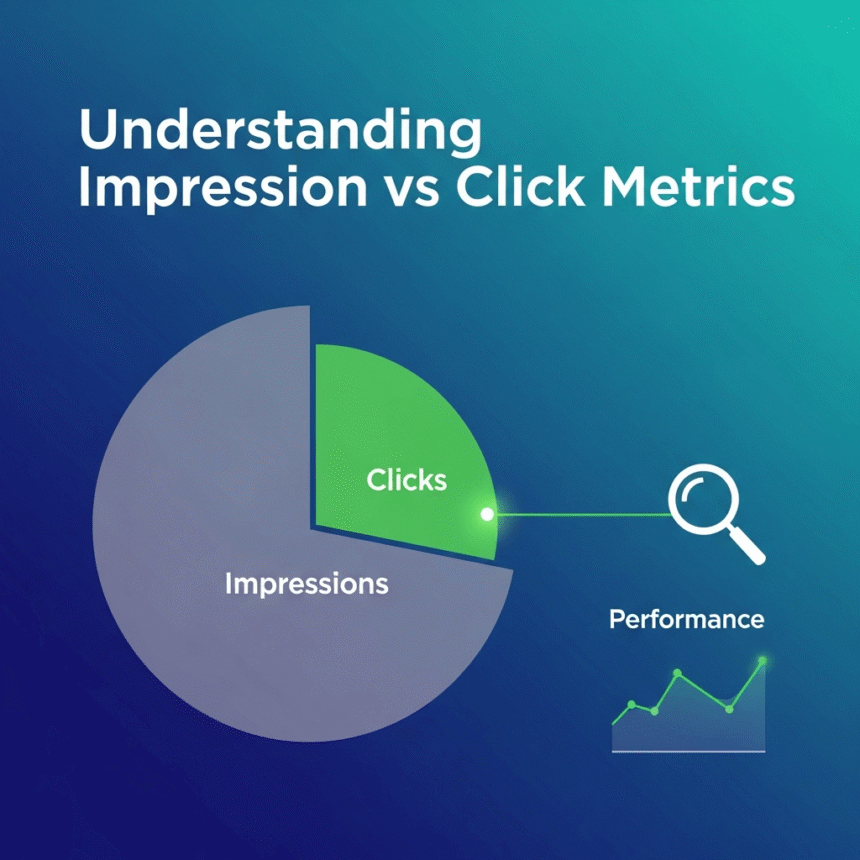
Ad impressions are the number of times your ads are seen by visitors. Website speed affects this in two main ways:
- Page Abandonment: As mentioned, users leave slow sites. Fewer people staying on your site leads to fewer ad views.
- Ad Loading Lag: Sometimes the text of your article loads, but the ads take a few extra seconds to appear. If a user reads a quick paragraph and scrolls down or leaves before the ad finishes loading, that impression is never counted.
The Viewability Factor
Advertisers want to know that their ads are actually being seen. This is measured by “viewability.” An ad is usually considered viewable if at least 50% of it is on the screen for at least one second.
If your website is slow, the “layout” often shifts as images and ads pop in late. This can frustrate users and cause them to scroll past the ad spots before the ads even render. High speed ensures that ads appear at the same time as your content, which leads to better viewability.
Impact on Search Engine Rankings
Search engines like Google prioritize fast websites. They use metrics called Core Web Vitals to measure how quickly a page becomes interactive and how stable it looks while loading.
If your site is slow, it might rank lower in search results. Lower rankings mean less organic traffic. Since traffic is the lifeblood of ad revenue, a slow site creates a cycle where you lose both visitors and money.
Simple Ways to Speed Up Your Site
Improving your speed does not always require a professional developer. You can start with these basic steps:
- Optimize Images: Large image files are the biggest cause of slow pages. Use tools to compress your photos before uploading them.
- Use a Clean Theme: Some website designs are heavy with unnecessary code. Choose a lightweight, fast-loading theme.
- Minimize Plugins: Every extra tool or plugin you add to your site adds more “weight” for the browser to load. Delete the ones you do not truly need.
- Enable Caching: This allows regular visitors to store parts of your site on their devices so they don’t have to download everything again on their next visit.
Final Thoughts
A fast website provides a better experience for your readers and a better environment for your ads. By shaving just one or two seconds off your loading time, you can keep more visitors on your page and ensure your ads are seen and counted.