
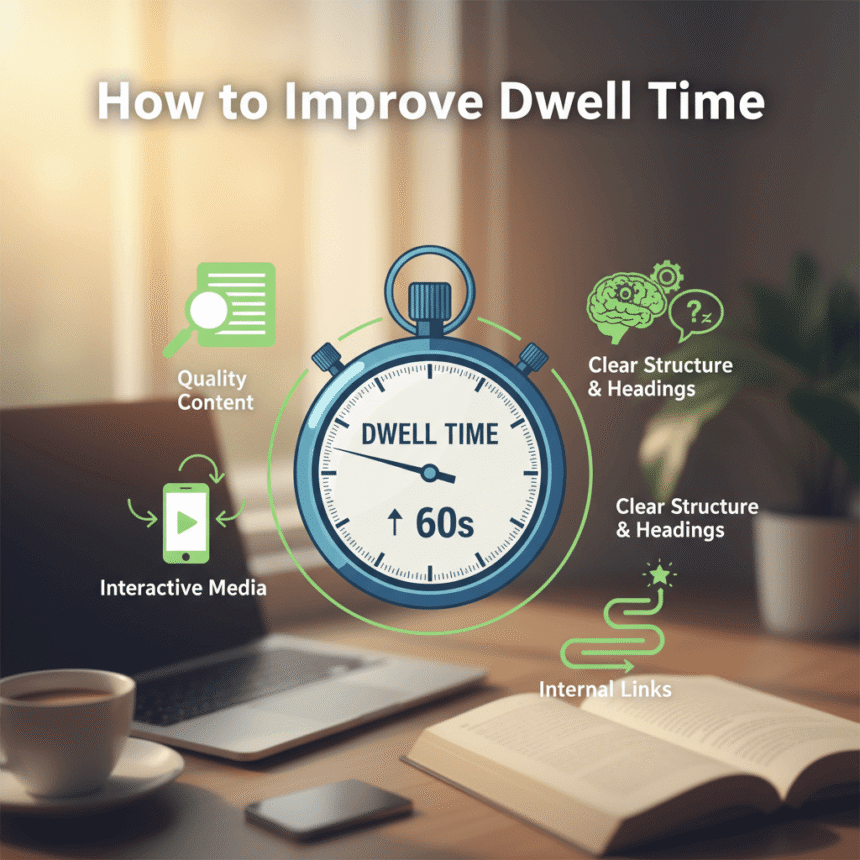

If you want to understand how well your website is performing, you need to look beyond just how many people click on your links. You need to know what they do once they arrive. This is where dwell time comes into play.
Dwell time is the amount of time a visitor spends looking at a page after clicking a link in search results, but before heading back to the search engine. It is a massive indicator of whether your content is actually solving the user’s problem.
Here is a guide on how to keep people on your page longer and improve your site’s value.
1. Hook the Reader Immediately
The first few seconds are critical. If a user lands on your page and sees a massive wall of text or an irrelevant image, they will leave.
The Intro: Use the “APP” method (Agree, Promise, Preview). Agree with their problem, promise a solution, and preview what you will cover.
Clear Headings: Make sure your main heading matches the title they clicked. Consistency builds trust.
2. Improve Your Page Loading Speed
People are impatient. If your site takes more than three seconds to load, most visitors will bounce before they even read your first sentence. Use compressed images and clean code to ensure your site feels snappy and responsive.
3. Prioritize Readability
Even the best information won’t be read if it’s hard on the eyes. To keep people scrolling, you should:
Use Short Paragraphs: Stick to 2 to 3 sentences per paragraph.
Use Bullet Points: Like this list, bullets make data easy to scan.
Choose the Right Font: Ensure your text is large enough to read on mobile devices without zooming in.
4. Use “Bucket Brigades”
These are short phrases that bridge one idea to the next. They act like a “hook” to keep the reader interested. Examples include:
“Here is the best part:”
“But wait, there’s more.”
“Why does this matter?”
“Look:”
These phrases create a rhythm that encourages the reader to keep moving down the page.
5. Embed Engaging Multimedia
A block of text can be tiring. Adding a relevant video, an infographic, or an interactive chart can significantly boost dwell time. Many users prefer watching a two minute video over reading a 1,000 word article. By providing both, you cater to different learning styles.
6. Internal Linking
If a user finishes your article, don’t let that be the end of their journey. Link to other relevant posts on your site. This keeps them in your “ecosystem” and shows that you are an authority on the topic.
7. Answer the User Intent
The most important factor is providing the answer the user is looking for. If your title promises “How to Improve Dwell Time,” don’t spend half the article talking about the history of the internet. Get to the point quickly and provide actionable steps.
By focusing on a better user experience and high-quality answers, you naturally encourage visitors to stay. When people spend more time on your site, it sends a signal that your content is helpful and worth visiting.