
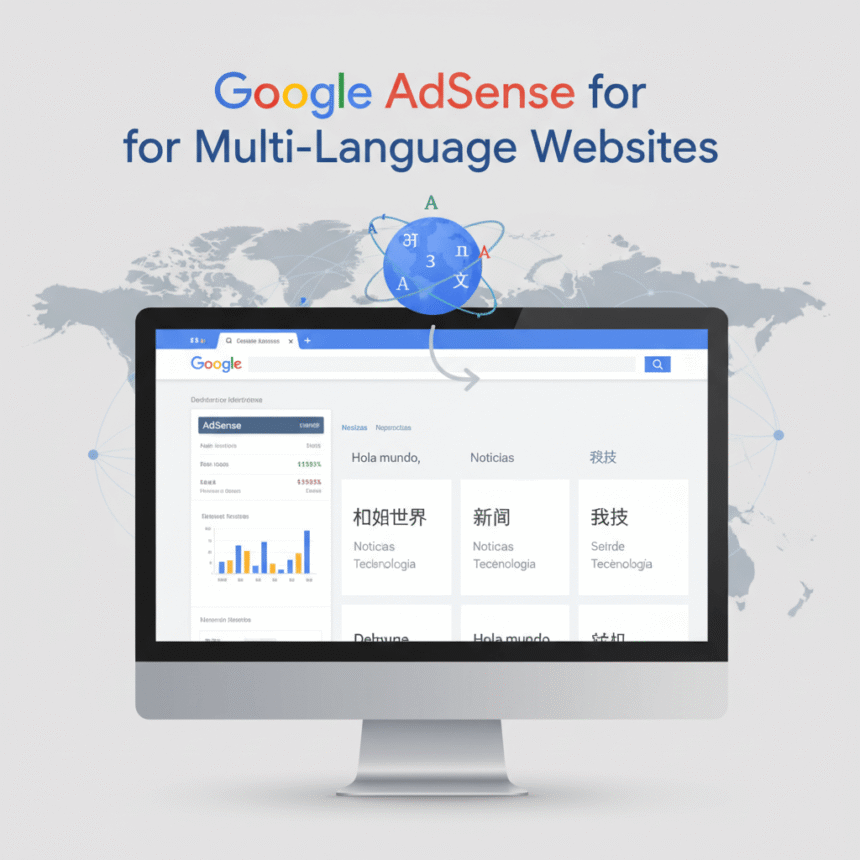

When you run a website that speaks more than one language, you open your doors to the whole world. It is like owning a shop in a busy international airport. However, managing ads on a site with multiple languages requires a bit more care than a standard site.
If you want to grow your audience and keep your account in good standing, here is how to handle Google AdSense for Multi-Language Websites effectively.
1. Stick to Supported Languages
Google does not support every language in the world for its ad program. Before you spend time translating your content into a new language, check the official list of supported languages.
If you place ad code on a page written in an unsupported language, the ads might not show up, or worse, you could face a policy violation. Always verify that your target language is on the list to ensure your ads run smoothly.
2. One Language Per Page
Google is very smart, but it works best when a single page has one clear language. Avoid mixing two languages on the same page, such as writing the first half in English and the second half in Spanish.
When you mix languages, the system might get confused about which ads to show. This can lead to irrelevant ads that your visitors won’t click on. For the best results, keep your headers, menus, and main content all in the same language for each specific page.
3. Use a Clear Website Structure
How you organize your site matters for both users and search engines. There are three common ways to set up a multi-language site:
- Subdirectories: example.com/es/ (Easy to set up).
- Subdomains: es.example.com (Good for separating different regions).
- Country Domains: example.es (Best for local trust, but more expensive).
Whichever you choose, make sure your visitors can easily switch between languages. A simple dropdown menu or a list of languages in the header is a great way to help users find the version they understand best.
4. Quality Over Auto-Translation
It is tempting to use a tool to automatically translate your entire site in one click. While these tools have improved, they often make mistakes that look unprofessional to native speakers.
Google values high-quality content. If your translated pages are hard to read or full of errors, visitors will leave quickly. This hurts your reputation and your traffic. If possible, have a human proofread your translations to make sure they sound natural.
5. Help Google Find Your Pages
To help search engines understand which version of a page to show to which user, you should use “hreflang” tags. These are small bits of code that tell Google, “This is the Spanish version of my English page.”
By using these tags, you ensure that a user searching in Madrid sees your Spanish page while someone in London sees your English one. This improves the user experience and helps keep your traffic levels healthy.
6. The Importance of Local Keywords
People in different countries use different words to search for the same thing. Don’t just translate your keywords literally. Research what people actually type into search engines in their own language.
By targeting the right local keywords, you will attract more visitors who are interested in your content. More visitors usually lead to better performance for your site.
Managing a multi-language site is a journey, but it is one of the best ways to reach a global audience. By keeping your content high-quality and your site structure organized, you can build a successful platform that serves people all over the world.