
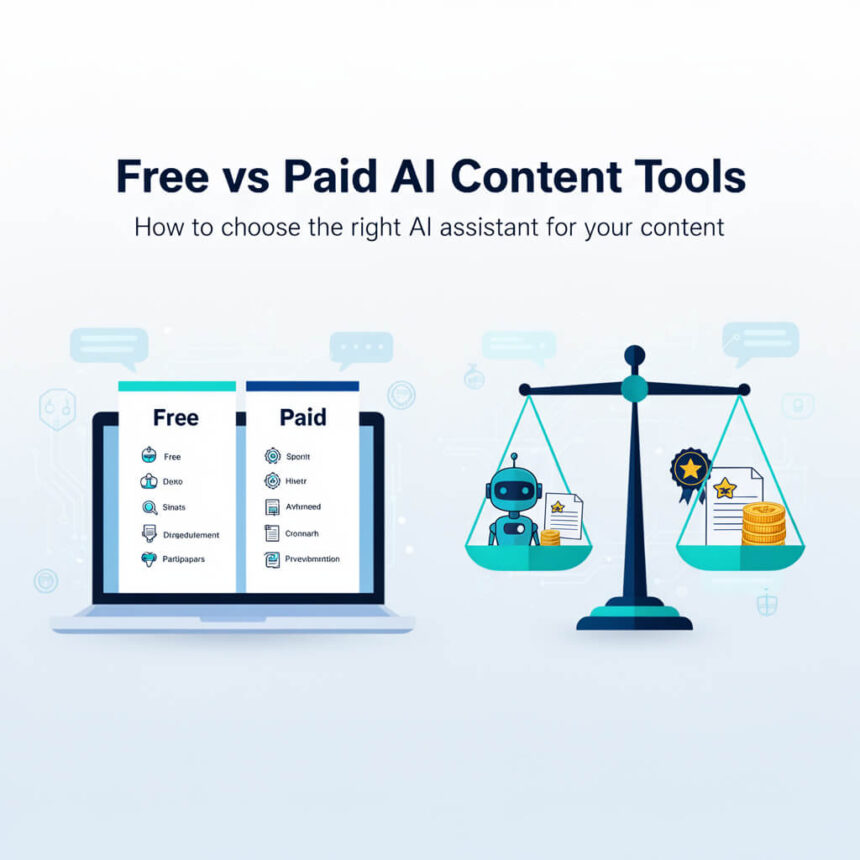

When you start a blog or a small business, you quickly realize how much content you need to create. From social media posts to long articles, the work never stops. This is where AI tools come in to help. But as you look for the right software, you will notice two main paths: free tools and paid subscriptions.
Choosing between them can be confusing. Do you really need to pay $20 or $50 a month, or can you get everything you need for $0? In this guide, we will break down the differences to help you decide which path is right for your goals.
The Reality of Free AI Tools
Free AI tools are fantastic for beginners. They allow you to experiment without any financial risk. Most people start here to see what the technology can actually do.
The Benefits
- Zero Cost: This is the most obvious perk. You can try multiple platforms to see which one has an interface you like.
- Great for Brainstorming: Free tools are perfect for beating writer’s block. They can generate lists of titles, outlines, or quick social media captions in seconds.
- Learning the Basics: Using free versions helps you learn how to write better “prompts” or instructions for the AI.
The Drawbacks
- Usage Limits: You will often hit a “wall” after a few requests. Some tools limit you to a certain number of words or images per day.
- Older Technology: Free versions usually run on older AI models. This means the writing might feel more repetitive or less creative than the latest versions.
- No Extra Features: You usually won’t get tools for SEO (Search Engine Optimization) or the ability to save your specific brand voice.
Why People Upgrade to Paid AI Tools
Once your website starts growing, the limitations of free tools can slow you down. Paid tools are designed for people who need to produce a lot of content quickly and professionally.
The Benefits
- Higher Quality Writing: Paid versions use the most advanced models. The text sounds more natural, handles complex topics better, and requires less editing.
- Time-Saving Features: Many paid tools include “templates” for specific tasks like product descriptions or email newsletters. They also offer built-in SEO tools to help your posts rank better on search engines.
- Consistency: Some premium tools allow you to upload examples of your writing. The AI then learns your “voice” so that every post it helps you write sounds like you.
- Priority Access: When many people are using the AI at once, free users often get slowed down or locked out. Paid users get fast, reliable access at all times.
The Drawbacks
- Monthly Expenses: Those subscriptions add up. If you aren’t creating content regularly, the cost might not be worth it.
- Learning Curve: Some paid platforms have so many features that they can feel overwhelming at first.
Comparison Table: Free vs Paid
| Feature | Free AI Tools | Paid AI Tools |
| Cost | $0 | $10 to $100+ per month |
| Word Limits | Low / Restricted | High / Unlimited |
| AI Model | Standard / Older | Latest / Most Advanced |
| SEO Tools | Rarely included | Often built-in |
| Support | Community forums | Dedicated customer help |
Which One Should You Choose?
The right choice depends on where you are in your journey.
Stick with Free Tools if:
- You are just starting a hobby blog.
- You only need help with one or two posts a month.
- You are still learning how AI fits into your workflow.
Invest in Paid Tools if:
- You are running a business or a professional blog.
- You need to publish content multiple times a week.
- You want your content to rank high on search engines with less manual work.
- You need to maintain a specific brand tone across many different platforms.
Final Thoughts
Both free and paid AI tools have a place in your toolkit. Most successful creators start for free and only upgrade once they feel that the free version is holding them back. The goal is to find a balance that saves you time without breaking your budget.