


The digital landscape is moving faster than ever. If you are a content creator, business owner, or marketer, you have likely felt the pressure to produce more content without sacrificing quality. Artificial Intelligence has changed the game, making it possible to generate vast amounts of text in seconds. However, there is a big difference between “more content” and “high-quality content.”
To truly succeed, you need a strategy that balances the speed of AI with the unique value that only a human can provide. Here is how you can master the art of creating high-quality AI content at scale.
1. Master the Art of Prompt Engineering
The quality of what the AI produces depends entirely on the instructions you give it. If you provide a generic prompt, you will get a generic answer. To create high-quality content, you must be specific.
Define the Persona: Tell the AI who it is. For example, “Write as a senior software engineer with 10 years of experience.”
Give Context: Explain the goal of the article and who the audience is.
Set Constraints: Specify the tone, word count, and what topics to avoid.
2. Build a Human-in-the-Loop Workflow
Scaling does not mean removing humans from the process. It means using humans where they matter most. A “Human-in-the-Loop” system ensures that every piece of content meets your brand standards.
The Idea Phase: Use AI to brainstorm titles and outlines, but have a human expert approve the direction.
The Generation Phase: Let the AI draft the sections based on your detailed outlines.
The Fact-Checking Phase: AI can sometimes “hallucinate” or state facts that are incorrect. A human must verify every statistic and claim.
The Polishing Phase: A human editor should add personal anecdotes, unique opinions, and a brand-specific voice.
3. Focus on Unique Value and E-E-A-T
Search engines and readers both look for Experience, Expertise, Authoritativeness, and Trustworthiness (E-E-A-T). AI can summarize existing information, but it cannot go out into the real world and gain experience.
To make your AI-assisted content stand out, inject original data, case studies, or interviews with experts. Use the AI to handle the heavy lifting of structure and drafting, while you focus on providing insights that cannot be found anywhere else on the internet.
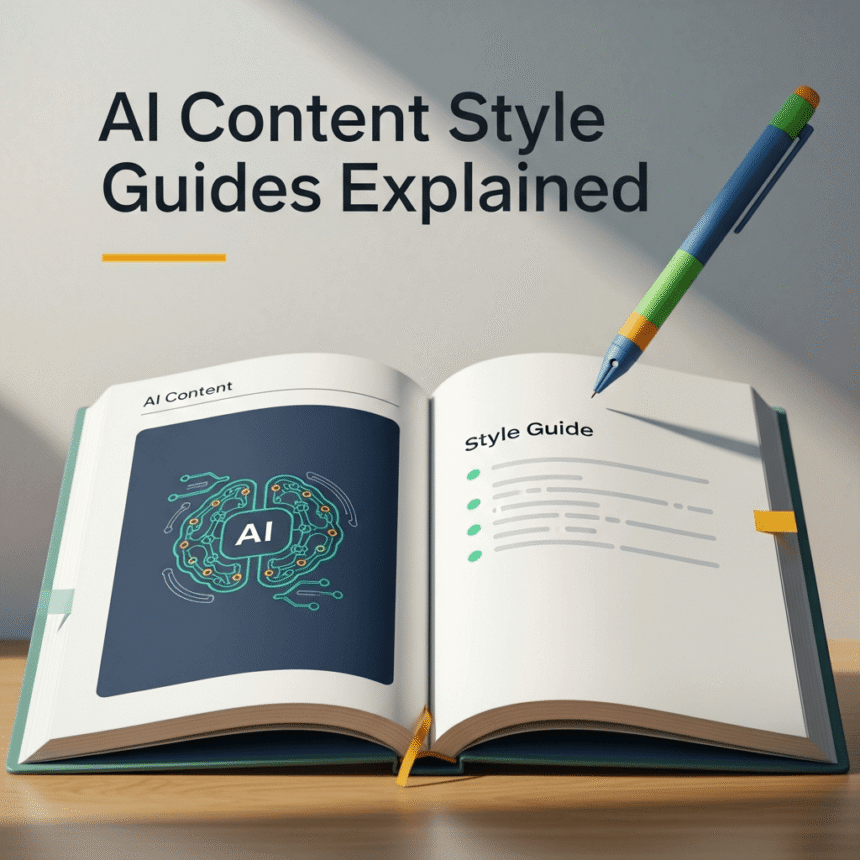
4. Use Style Guides to Maintain Consistency
When you scale content, it is easy for the “voice” of your blog to become inconsistent. To prevent this, create a digital style guide. You can actually feed this guide into your AI tools to ensure the output matches your preferred grammar, formatting, and tone. This reduces the amount of time editors spend fixing basic stylistic errors.
5. Iteration is Key
Creating content at scale is a process of constant improvement. Look at your analytics to see which AI-generated posts are performing best. Are readers staying on the page? Are they clicking your links? Use these insights to refine your prompts and workflows.
By combining the raw power of AI with human creativity and oversight, you can fill your content calendar with posts that actually resonate with your audience and drive traffic to your site.