
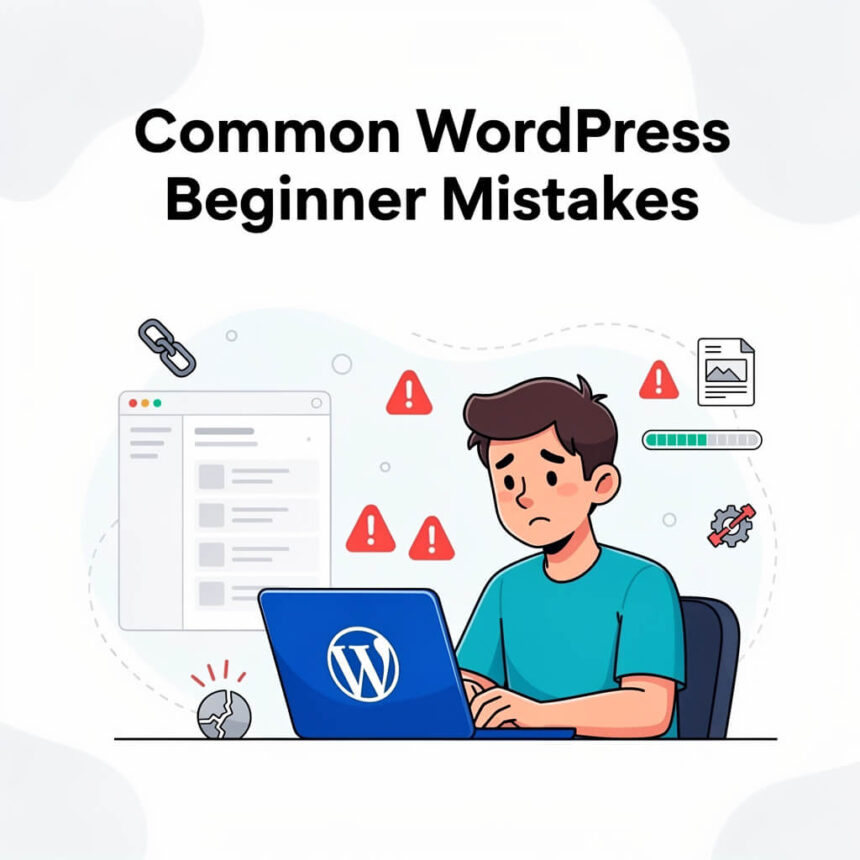

Starting a new website is an exciting journey, but it can also be a steep learning curve. WordPress is the most popular way to build a site because it is powerful and flexible. However, that flexibility often leads new users into a few common traps.
If you are just starting out, avoiding these mistakes can save you hours of frustration and keep your website running smoothly. Here are the most common WordPress beginner mistakes and how you can avoid them.
1. Choosing the Wrong Platform
Many beginners don’t realize there is a big difference between WordPress.com and WordPress.org.
- WordPress.com is a hosting service that is easy to start but has many limitations on how you can customize your site.
- WordPress.org (often called self-hosted WordPress) gives you full control over your files, allows you to install any plugin, and lets you customize every inch of your site.
Most people who want to grow a professional blog or business site eventually find they need the freedom of WordPress.org. Picking the right one from day one prevents the headache of moving your site later.
2. Overloading Your Site with Plugins
Plugins are like apps for your website. They add cool features like contact forms, sliders, and social media buttons. It is tempting to install dozens of them, but this is a major mistake.
Every plugin you add carries a bit of weight. Too many plugins can slow down your loading speed, cause technical conflicts, and even create security holes. Stick to the essentials. If you aren’t using a plugin, deactivate and delete it.
3. Ignoring Regular Updates
WordPress frequently releases updates for its core software, as well as for themes and plugins. Beginners often ignore the little notification bubbles in their dashboard, fearing that an update might break their site.
In reality, ignoring updates is much more dangerous. Updates often include critical security patches that protect you from hackers. They also fix bugs and improve performance. Before you update, just make sure you have a recent backup of your site.
4. Forgetting to Back Up Your Website
Imagine spending months writing posts and designing your layout, only for a technical glitch or a hack to wipe it all away. This happens more often than you think.
Never rely solely on your hosting company for backups. Use a reliable backup plugin to create automatic copies of your site. Store these copies in a safe place like Google Drive or Dropbox so you can restore your site in minutes if anything goes wrong.
5. Keeping the Default “Admin” Username
When you first install WordPress, many setups create a default user called admin. This is a gift to hackers. Since they already know your username is admin, they only have to guess your password to get in.
Always create a custom username that is unique to you. If your site already has an “admin” user, create a new user with administrator rights, log in as the new user, and delete the old “admin” account.
6. Not Optimizing Images
High-quality photos make a blog look great, but large image files are the number one reason for slow websites. Beginners often upload photos directly from their phone or a stock photo site without resizing them.
Before you upload an image, use a tool to compress the file size. A site that takes more than a few seconds to load will lose visitors quickly. Fast sites provide a better experience and rank better in search results.
7. Using the Default Permalink Structure
By default, WordPress might use a URL structure that looks like this: yoursite.com/?p=123. This tells the reader (and search engines) nothing about what is on the page.
Go to Settings > Permalinks and change it to Post Name. This makes your links look like yoursite.com/how-to-bake-cake/, which is much easier to read and better for your site’s visibility.
8. Leaving the “Discourage Search Engines” Box Checked
During the setup phase, many people check a box in the settings to hide their site from search engines while they are still working on the design. This is fine for a few days, but many beginners forget to uncheck it once the site is live.
If your site isn’t showing up in search results, go to Settings > Reading and make sure the box next to Search Engine Visibility is empty.
Summary
Building a WordPress site is a learning process. By staying on top of your updates, keeping your site light on plugins, and prioritizing security, you are already ahead of most beginners. Focus on providing value to your visitors, and the technical side will become second nature over time.