

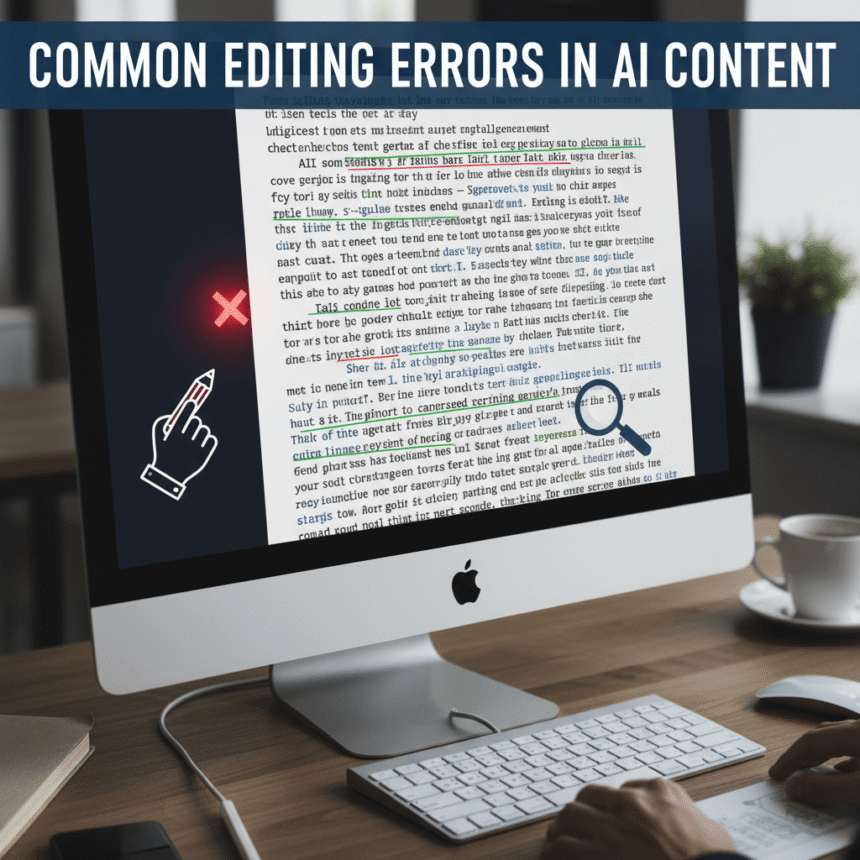

Using AI to draft articles is a fantastic way to save time and get your ideas on the page. However, raw AI text often contains “telltale signs” that can make your blog feel generic or even untrustworthy. To keep your readers engaged, you need to know how to spot and fix these common mistakes.
Here are the most frequent editing errors in AI content and how you can fix them to create high-quality blog posts.
1. Confident Hallucinations
The most dangerous error is “hallucination.” This happens when an AI provides a fact, date, or statistic that sounds completely true but is actually made up. AI models are built to predict the next word in a sentence, not necessarily to check facts.
The Fix: Never take a number or a quote at face value. Always verify every statistic or historical event against a reliable source. If the AI cites a specific study, go find that study yourself to make sure the data matches.
2. Overuse of AI Buzzwords
AI has a “favorite” vocabulary. You will often see words like delve, meticulously, vibrant, tapestry, and pivotal appearing much more than they would in human writing. Using these words too often makes your content sound like a bot wrote it.
The Fix:
Scan your draft for these “red flag” words. Replace them with simpler, more natural alternatives. For example, instead of saying “Let’s delve into the details,” just say “Let’s look at the details.”
3. Robotic Sentence Structure
AI often produces sentences that are all roughly the same length. This creates a monotonous “drumbeat” effect that bores readers. Human writers naturally mix short, punchy sentences with longer, more descriptive ones.
The Fix:
Read your content out loud. if you find yourself running out of breath or if the rhythm feels flat, break up long sentences. Use short sentences to emphasize important points.
4. Lack of Personal Experience
AI can summarize facts, but it doesn’t have a life. It hasn’t tried a new recipe, failed at a business, or felt the frustration of a broken computer. AI content often feels hollow because it lacks “I” or “we” statements backed by real stories.
The Fix:
Inject your own personality. Add a quick anecdote about a time you faced the problem you are writing about. Sharing a personal win or a mistake makes the content relatable and proves there is a human behind the keyboard.
5. Repetitive Transitions
If you see a lot of paragraphs starting with Furthermore, Moreover, In addition, or In conclusion, you are looking at classic AI transitions. While grammatically correct, these can feel stiff and academic for a blog post.
The Fix:
Use conversational transitions. Try phrases like “Here is the thing,” “But wait, there is more,” or “So, why does this matter?” Sometimes, you don’t even need a transition word; the logic of the next sentence can carry the reader through.
6. Excessive Hedging
AI is programmed to be cautious. It loves to use “hedging” language like it could be argued, potentially, it seems that, or generally speaking. While this is safe, it can make your writing sound weak and indecisive.
The Fix:
Take a stand. If you know something is true, say it directly. Change “This tool could potentially help you” to “This tool helps you.” Removing the fluff makes your voice sound more authoritative.
7. Generic Conclusions
Many AI tools end articles by summarizing everything that was just said in a very dry way. These conclusions often start with “In summary” or “To wrap up” and offer no new value or next steps for the reader.
The Fix:
End with a “Call to Action” or a final thought that leaves the reader inspired. Instead of just repeating your points, tell the reader what they should do next or ask them a question to start a conversation in the comments.
Comparison of AI vs. Edited Content
| Feature | Raw AI Output | Edited Human-Like Content |
| Tone | Formal and detached | Conversational and warm |
| Facts | Plausible but unverified | Verified and cited |
| Flow | Predictable and repetitive | Varied and rhythmic |
| Value | General information | Specific insights and stories |
By keeping an eye out for these common errors, you can turn a basic AI draft into a professional blog post that truly connects with your audience.



Tings gettin hard brav 😂😂