
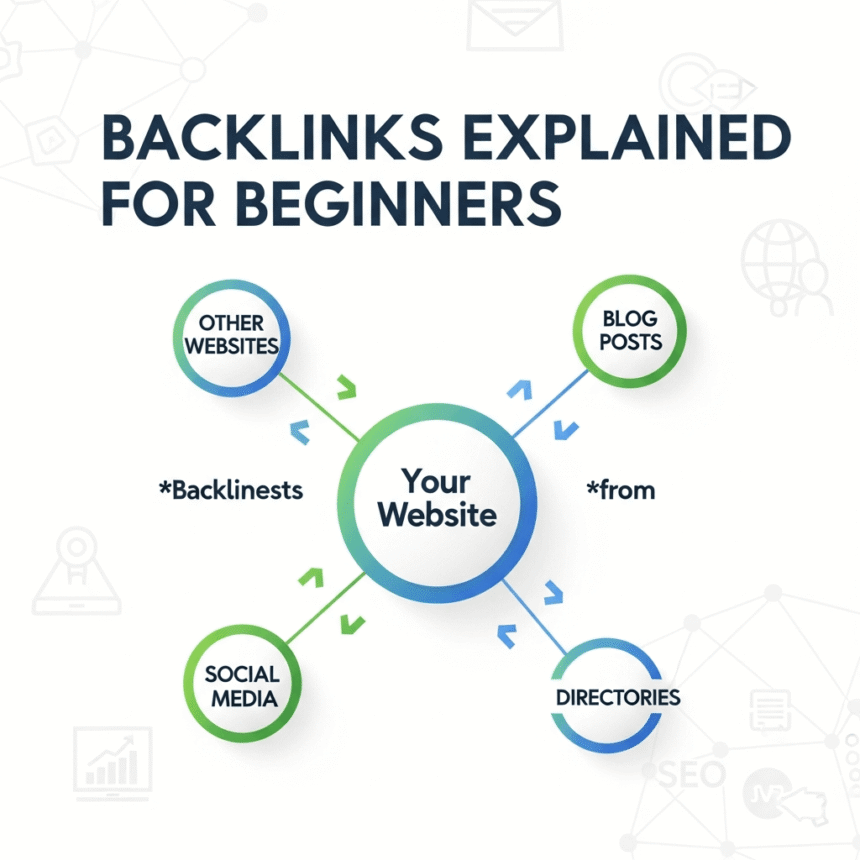

If you are new to the world of websites and search engines, you might have heard people talking about backlinks. They are often described as the “secret sauce” for getting more visitors. But what exactly are they, and why do they matter so much?
In this guide, we will break down everything you need to know about backlinks in simple terms.
What is a Backlink?
A backlink is created when one website links to another website.
Think of it like a recommendation in real life. If a famous chef tells everyone that your restaurant is great, more people will want to eat there. In the digital world, a link is that recommendation. When Website A links to Website B, Website A is giving a “vote of confidence” to Website B.
Why Are Backlinks Important?
Backlinks are essential for two main reasons: rankings and discoverability.
1. Improved Rankings
Search engines like Google look at backlinks as a sign of quality. If many high-quality sites link to your page, search engines assume your content is valuable. This helps your website show up higher when people search for topics you write about.
2. Faster Discovery
Search engine “spiders” find new content by clicking on links from pages they already know. If a popular site links to your new blog post, the search engine will find your site much faster than if you had no links at all.
Not All Backlinks Are Equal
In the past, people thought that having thousands of links was the goal. Today, it is more about quality than quantity. There are two main types of links you should know about.
Natural Editorial Links
These are the best kind. This happens when someone reads your post, likes it, and decides to link to it because it provides value to their readers.
“Nofollow” vs. “Dofollow” Links
Most links are “dofollow” links. These pass on the “voting power” we talked about earlier. However, some links are “nofollow.” This tells search engines not to count that link as a vote of confidence. You often see these in social media bios or comment sections.
How to Get High-Quality Backlinks
Building links takes time, but it is worth the effort. Here are a few simple ways beginners can start.
- Create Great Content: If your blog post is the most helpful guide on a topic, people will naturally want to share it.
- Guest Posting: You can write a guest article for another website in your niche. In return, they usually let you include a link back to your own site.
- Resource Pages: Many websites have “Best Tools” or “Useful Links” pages. If your content fits, you can ask the owner to include your link.
- Fix Broken Links: You can find websites that have broken links (links that lead to a 404 error page). You can suggest that they replace the dead link with a link to your relevant, working content.
Common Mistakes to Avoid
When you are starting out, stay away from “get rich quick” schemes for links.
- Buying Links: Never pay for a package that promises “5,000 links for $10.” These are usually low-quality and can actually get your website penalized by search engines.
- Link Exchanges: This is when you say, “I will link to you if you link to me.” Doing this too much looks suspicious.
- Spamming Comments: Leaving your link in the comment section of every blog you find does not help your rankings and makes your brand look bad.
Summary
Backlinks are the backbone of a successful website. By focusing on creating helpful content and building relationships with other website owners, you will start to see your traffic grow. Focus on quality, stay patient, and the results will follow.