
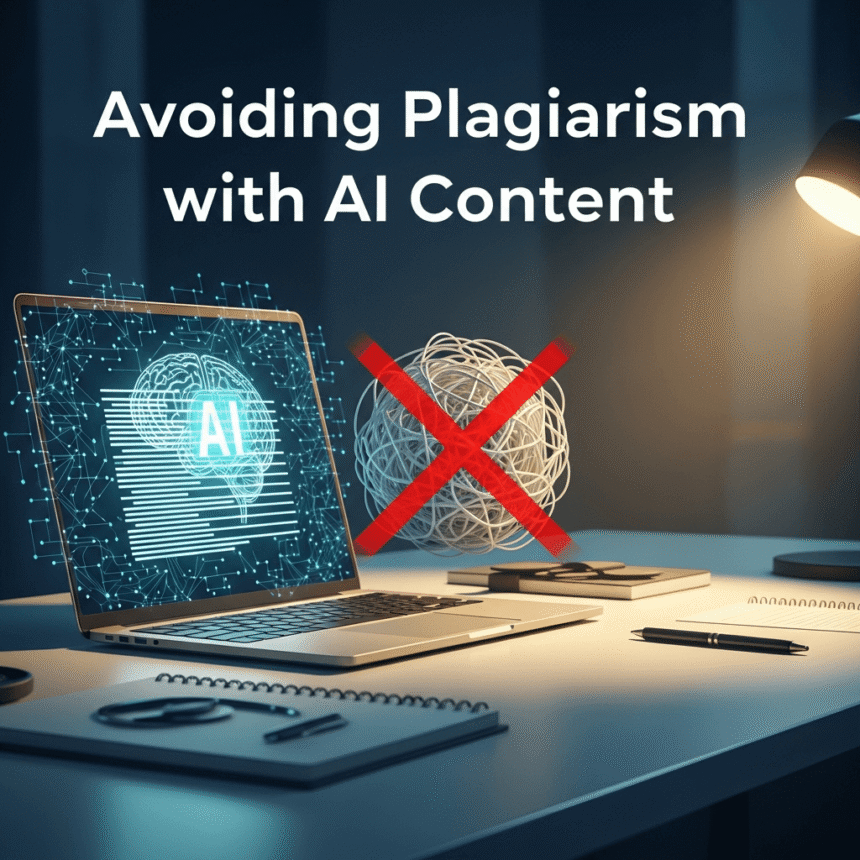

Artificial Intelligence has changed how we write. Whether you are a student, a blogger, or a business owner, AI tools can help you generate ideas and drafts in seconds. However, there is a major catch that many people overlook: the risk of plagiarism.
Even though an AI creates “new” sentences, those sentences are built using patterns from existing data. If you aren’t careful, your AI-generated draft could closely mimic someone else’s work or fail to provide the original thought required for high-quality content.
Here is how you can use AI responsibly while keeping your work original and honest.
Understand How AI “Thinks”
AI models do not have personal experiences or new ideas. They predict the next most likely word in a sequence based on billions of pages of text they have already read. Because they rely on existing information, they can sometimes repeat phrases, facts, or unique structures from their training data. This is often called “algorithmic plagiarism.”
Always Use a Plagiarism Checker
Never assume that because a robot wrote it, it is unique. Before you post anything, run your text through a reliable plagiarism scanner. These tools compare your draft against billions of web pages. If the tool finds a match, rewrite those sections in your own voice.
Add Your Personal Human Touch
The best way to avoid plagiarism is to make the content yours. AI is great at providing a skeleton, but you need to provide the “soul.”
Share personal stories: AI cannot replicate your specific life experiences.
Express an opinion: AI is designed to be neutral. Taking a stand on a topic makes the content unique to you.
Update the facts: AI knowledge has a cutoff date. Adding the latest news or data ensures your post is fresh and original.
Proper Citation is Still Necessary
If the AI generates a specific statistic, a quote, or a very niche fact, you must verify it. If that information came from a specific study or a news outlet, cite that source. Using AI does not give you a pass on the rules of research. If you use a specific idea that isn’t common knowledge, tell your readers where it came from.
Rewrite and Restructure
AI often follows a very predictable pattern. It usually introduces a topic, lists three points, and gives a summary. To make your blog post stand out and avoid sounding like every other AI-generated page, change the structure. Move sections around, combine ideas, and use different headings.
By using AI as a collaborator rather than a replacement for your own brain, you can create fast, efficient content that remains 100% original.