

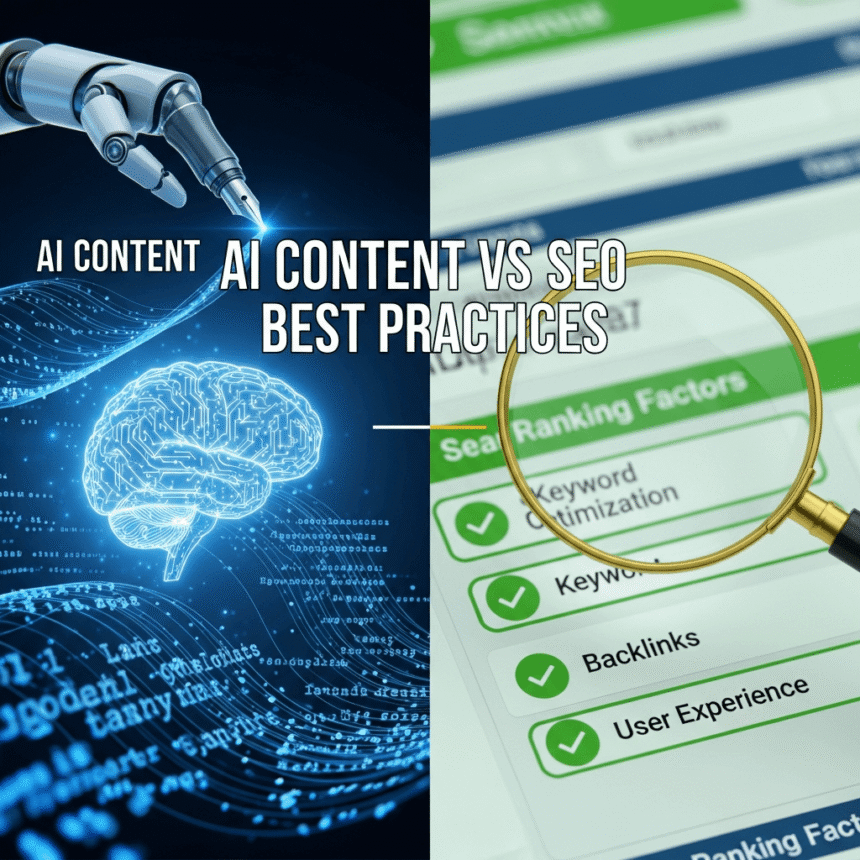

Artificial Intelligence is changing the way we create content forever. Today, anyone can generate a full blog post in seconds. But does this mean traditional SEO is dead? Not at all. In fact, following SEO best practices is now more important than ever to help your site stand out from the sea of computer-generated text.
If you want to use AI without hurting your rankings, you need to understand how search engines view this content and how to mix technology with a human touch.
How Search Engines View AI Content
Search engines do not hate AI. Their main goal is to show the most helpful and reliable information to the user. If an AI writes a great article that answers a question perfectly, it can rank well.
However, search engines are getting much better at spotting “low effort” content. This includes pages that are just copies of other sites or text that sounds robotic and adds nothing new. To stay safe, you must focus on quality rather than just quantity.
The Role of E-E-A-T in 2026
Google and other search engines use a set of guidelines called E-E-A-T to judge content. This stands for Experience, Expertise, Authoritativeness, and Trustworthiness. AI is very good at sharing facts, but it struggles with the first “E” which is Experience.
- Experience: This is your secret weapon. AI has never “tried” a product or “felt” an emotion. By adding your own stories, photos you took yourself, and personal lessons, you prove to search engines that a real person is behind the screen.
- Expertise: Use AI to build an outline, but make sure a human expert checks the facts. AI can sometimes make up statistics or dates, which ruins your site’s trust.
Best Practices for Mixing AI and SEO
To get the best results, you should treat AI as a smart assistant, not a replacement for a writer. Here are the best ways to keep your SEO strong:
1. Focus on User Intent
Before you start writing, ask yourself what the reader is actually looking for. Are they trying to buy something, or do they just need a quick answer? AI often writes generic text. You need to guide it to answer specific questions that your audience cares about.
2. Use a Clear Structure
Structure helps both readers and AI search tools understand your page. Use clear headings (H2 and H3) to break up your text. This makes your content “scannable.” Most people don’t read every word; they look for the section that answers their specific problem.
3. Lead with the Answer
Search engines now feature “AI Overviews” at the top of results. To get featured there, try to answer the main question of your article in the very first paragraph. Keep it short and direct.
4. Fact-Check Everything
Trust is the hardest thing to build and the easiest to lose. If your blog post contains a wrong date or a fake stat generated by a bot, your SEO will suffer. Always verify every claim with a reliable source.
Improving Scannability and Tone
A high-quality blog post should be easy to read. Avoid long, “wall-of-text” paragraphs. Instead, keep your sentences simple and use bullet points for lists.
- Keep it simple: Write like you are talking to a friend.
- Be direct: Avoid using “fluff” or filler words that don’t add value.
- Add value: If your post says the exact same thing as the top ten results on Google, why should anyone visit your site? Add a unique opinion or a new data point to make it special.
Final Thoughts
The battle is not really “AI Content vs SEO.” Instead, it is about using AI to follow SEO best practices faster. Technology can help you research and draft, but your human experience is what will actually attract and keep visitors on your site.