
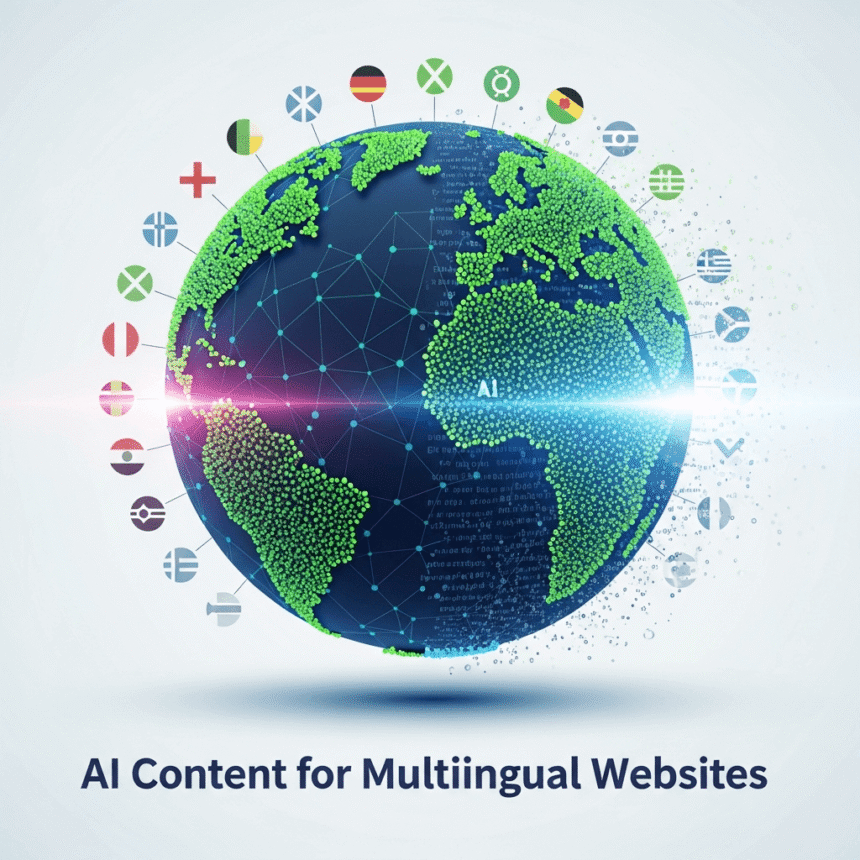

Expanding your digital presence across borders is no longer a luxury but a necessity for growth. In 2026, the bridge between different languages is being built faster than ever thanks to artificial intelligence. Using AI content for multilingual websites allows you to speak to a global audience without the massive costs and long timelines of traditional translation.
However, simply running your blog through a basic translator is not enough to win over international visitors. To succeed, you need a strategy that balances the speed of AI with the nuance of local culture.
The Shift from Translation to Localization
There is a major difference between translating words and localizing content. Translation changes the text from Language A to Language B. Localization, on the other hand, adapts the message so it feels natural to a person living in a specific region.
AI has evolved significantly in this area. Modern Large Language Models (LLMs) can now understand context. Instead of a literal word-for-word swap, they can rephrase idioms, adjust formal or informal tones, and even suggest culturally relevant examples. For a multilingual website, this means your brand voice remains consistent whether a customer is reading in Tokyo, Berlin, or Mexico City.
Key Benefits of AI in Multilingual Strategies
- Speed and Scale: Traditional localization for a 50-page website could take weeks. AI can generate high-quality drafts for multiple languages in a matter of minutes.
- Cost Efficiency: By using AI for the heavy lifting, you reduce the hours required from professional linguists. They can focus on “post-editing” rather than starting from scratch.
- SEO Synchronization: AI tools can now automatically translate metadata, image alt-text, and URL slugs. This ensures that your site is discoverable in local search engines like Yandex or Baidu, not just Google.
- Consistency: AI uses “Translation Memories” to remember how you translated specific brand terms in the past. This prevents confusion by ensuring your product names and slogans are identical across all pages.
Best Practices for AI-Driven Multilingual Content
To get the most out of AI content for multilingual websites, follow these essential steps:
1. Start with High-Quality Source Content
AI is only as good as the input it receives. If your original English text is cluttered with slang, complex sentences, or unclear instructions, the translated versions will be even worse. Use simple, direct language in your primary version to give the AI the best foundation.
2. Use Context-Aware Prompts
When using AI tools, don’t just say “translate this.” Instead, give the AI a persona. Tell it: “Translate this product description into Spanish for a professional audience in Argentina. Keep the tone helpful and use local business terminology.”
3. Implement the “Human-in-the-Loop” Model
For high-stakes pages like your homepage, checkout process, or legal disclaimers, always have a native speaker review the AI output. This ensures you avoid “hallucinations” or cultural mistakes that could damage your brand’s reputation.
4. Automate the Technical SEO
A multilingual site needs specific technical tags, such as hreflang tags, to tell search engines which language version to show to which user. Many modern AI-powered website plugins now handle this automatically, ensuring your international SEO is perfect from day one.
Choosing the Right Tools
The landscape of tools has changed. You no longer need to manually copy and paste text. Platforms like Weglot, Lokalise, and Phrase now offer direct integrations with your CMS. These tools use a “neural” approach, often combining several AI models to find the most accurate translation for a specific language pair.
The Future of Global Content
As we move further into 2026, the barrier to entering new markets is disappearing. AI content for multilingual websites is the engine behind this change. By embracing these tools, you can transform your local site into a global platform, reaching millions of new users in their own native languages.
The goal is no longer just to be understood, but to be truly relatable. With the right mix of AI efficiency and human oversight, your website can feel “at home” anywhere in the world.