

In the fast-paced world of digital publishing, knowing what is coming next is the difference between thriving and just surviving. Traditional ways of guessing future income often rely on spreadsheets and gut feelings. However, as audiences change and markets shift, these old methods are falling behind.
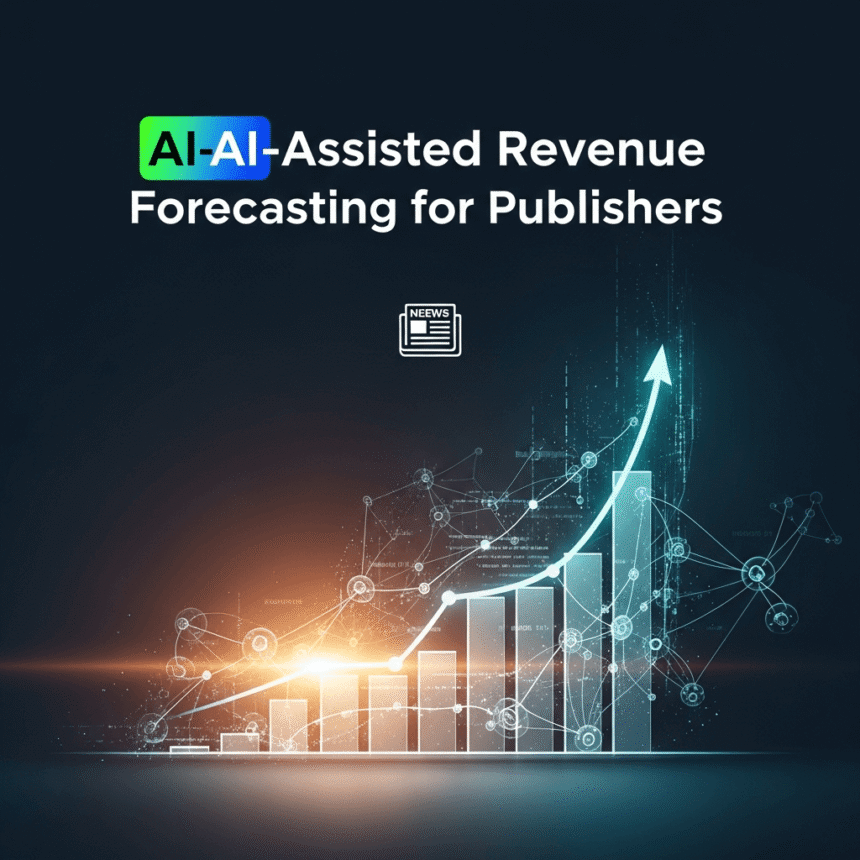
Today, smart publishers are turning to Artificial Intelligence (AI) to bring clarity to their financial future. AI-assisted revenue forecasting is not just a high-tech trend; it is a practical tool that helps you make better decisions, manage your budget, and grow your business with confidence.
What is AI-Assisted Revenue Forecasting?
At its heart, revenue forecasting is about predicting how much money your site will make over a specific period. AI takes this a step further by using machine learning. Instead of just looking at last year’s numbers, AI looks at thousands of tiny details at once.
It analyzes your website traffic, how people interact with your content, seasonal trends, and even changes in the wider economy. By spotting patterns that a human might miss, AI provides a much more accurate picture of your future earnings.
Why It Matters for Your Publishing Business
The digital landscape is unpredictable. One day a certain topic is viral, and the next day it is forgotten. AI helps you navigate this volatility in several ways:
Precision and Accuracy: AI reduces human error. It doesn’t get tired and doesn’t have “hunches.” It relies on hard data to give you a realistic number.
Proactive Planning: If the AI predicts a dip in revenue next month, you can act now. You might launch a new newsletter, adjust your social media strategy, or cut back on unnecessary costs before the “rainy day” arrives.
Resource Allocation: When you know which sections of your site are likely to bring in the most money, you can put your best writers and editors on those topics. This ensures you are investing your time where it counts the most.
Better Risk Management: AI can run “what-if” scenarios. For example, it can show you how a 10% drop in traffic might affect your bottom line, helping you build a safer financial cushion.
How the Process Works
You don’t need to be a data scientist to benefit from AI forecasting. Most modern tools follow a simple path:
Data Collection: The system gathers data from your analytics, subscription platforms, and historical records.
Pattern Recognition: The AI looks for links between different events. For instance, it might notice that your revenue always spikes when you publish long-form guides on Tuesdays.
The Prediction: The software generates a report showing expected revenue for the coming weeks or months.
Continuous Learning: The best part about AI is that it gets smarter. As more data comes in, it compares its past predictions with what actually happened and adjusts its logic to be even more accurate next time.
Moving Forward
Switching to AI-assisted forecasting might feel like a big step, but it is one that pays off. It moves your business from a “wait and see” approach to a “plan and grow” strategy. By letting technology handle the complex math, you can focus on what you do best: creating great content for your readers.