

Choosing how to display ads on your website is one of the most important decisions for any digital publisher. With the introduction of modern automation, the process has shifted from manual placement to intelligent systems that do the work for you.
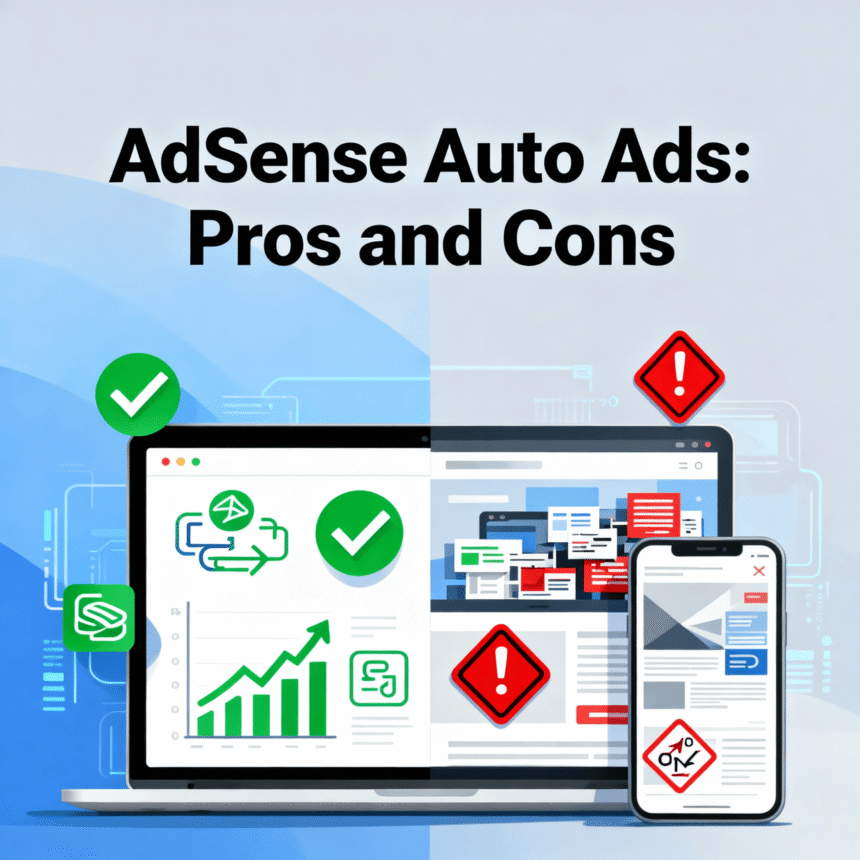
One of the most popular tools available today is AdSense Auto Ads. This feature uses machine learning to scan your pages and automatically place ads where they are most likely to perform well. While it offers a “set it and forget it” convenience, it is not without its drawbacks.
In this post, we will explore the pros and cons of using Auto Ads to help you decide if it is the right fit for your website.
What are AdSense Auto Ads?
Before diving into the benefits and risks, it is helpful to understand how the system works. Instead of creating individual ad units and pasting code into specific parts of your website, you simply add one piece of code to your site header.
The system then analyzes your layout, identifies empty spaces, and decides which types of ads to show. These can include:
- In-page ads: Standard banners placed within your content.
- Anchor ads: Ads that stick to the top or bottom of the screen.
- Vignette ads: Full-screen ads that appear between page loads.
- Side rails: Ads that appear on the sides of the screen on desktop devices.
The Pros of AdSense Auto Ads
1. Ease of Use and Time Savings
The biggest advantage is the simplicity. If you have hundreds of blog posts, manually placing ads in each one is a massive task. With Auto Ads, the system handles the placement across every page instantly. This allows you to focus more on creating content rather than managing technical layouts.
2. Potential for Higher Revenue
Because the system uses machine learning, it can find ad placements that you might have missed. It tests different positions and formats to see which ones get the most engagement. By filling more available slots efficiently, many publishers see a boost in their overall earnings.
3. Optimization for Mobile
Auto Ads are built to be responsive. They automatically adjust to fit the screen size of the visitor, whether they are on a smartphone, tablet, or desktop. This ensures that your ads look professional without you having to write custom code for different devices.
4. Automatic Updates
When new ad formats are released, you don’t need to change the code on your site. You can simply toggle the new format “on” in your dashboard, and the system begins deploying it immediately.
The Cons of AdSense Auto Ads
1. Lack of Control
The most common complaint from publishers is the loss of control. You cannot choose exactly where an ad appears. Sometimes, the algorithm might place an ad in a spot that breaks your design or separates a heading from its paragraph, making the page look cluttered.
2. Impact on User Experience
While the algorithm tries to be smart, it can sometimes be too aggressive. It might place too many ads on a single page, which can frustrate your readers. If a visitor feels “bombarded” by ads, they are more likely to leave your site quickly, which can hurt your long-term growth.
3. Layout Shifts
Sometimes, as Auto Ads load, they can cause the content on your page to jump or shift. This is known as Cumulative Layout Shift (CLS). If a reader is about to click a link and an ad suddenly appears, pushing the link down, it creates a poor experience and can negatively affect how search engines view your site’s performance.
4. Limited Performance Data per Placement
When you use manual ads, you can see exactly how much a specific sidebar ad is making compared to an ad inside the text. With Auto Ads, the data is often grouped together, making it harder to pinpoint exactly which specific spot on your page is your “money maker.”
How to Get the Best of Both Worlds
You don’t have to choose just one method. Many successful site owners use a hybrid approach. You can place a few manual ads in your most important spots (like right under the post title) and then turn on Auto Ads to fill in the remaining gaps.
Additionally, the dashboard allows you to:
- Set an “Ad Load” limit: You can tell the system to show fewer ads if you feel it is becoming too crowded.
- Exclude pages: If you have a “Contact Us” or “About” page where you want zero distractions, you can tell the system to stay away from those specific URLs.
Final Thoughts
AdSense Auto Ads are an excellent tool for beginners or those with massive websites who don’t have the time to manage every single ad unit. However, if you are a “pixel-perfect” designer who wants total authority over your site’s look and feel, manual placement remains the better choice.
The best way to decide is to run a test. Try Auto Ads for a few weeks, monitor your revenue and your bounce rate, and see how your audience reacts.