

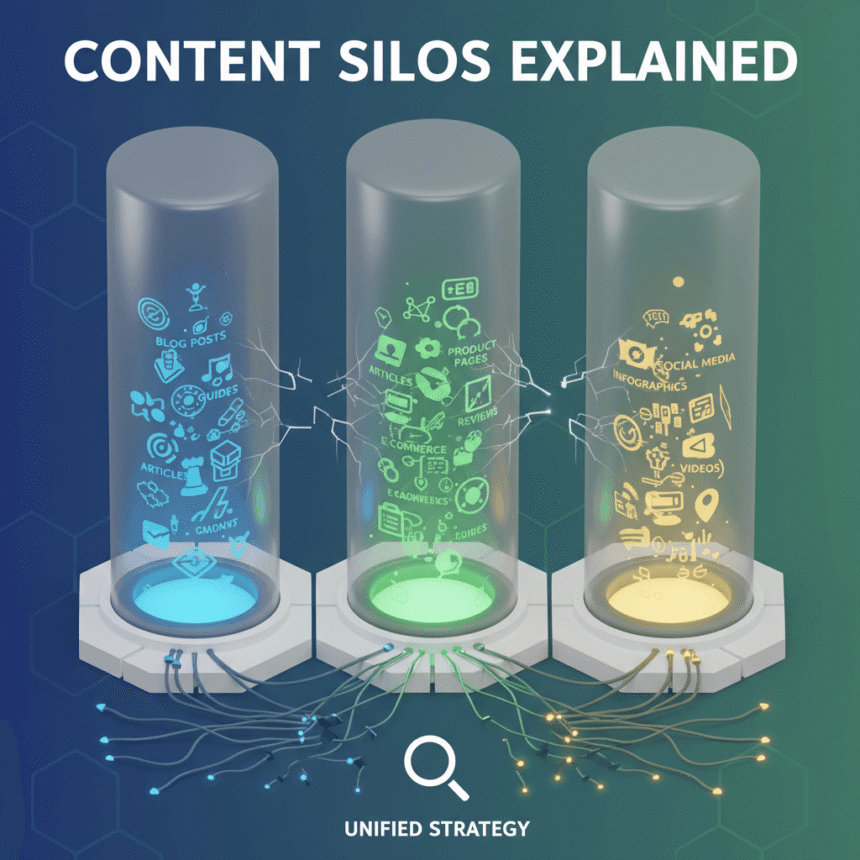

If you have ever felt like your website is a messy junk drawer where nothing is easy to find, you are not alone. Many website owners struggle with organizing their information. This is where Content Silos come into play.
Think of a silo like a filing cabinet. Instead of throwing every piece of paper into one big pile, you put them into specific folders based on their topic. This helps both your readers and search engines understand exactly what your site is about.
What is a Content Silo?
A content silo is a method of grouping related content into distinct categories. It is a way of organizing your website structure so that all pages about a specific subject are linked together.
For example, if you run a fitness blog, you might have three main silos:
Weight Loss
Muscle Building
Yoga
Everything you write about yoga stays in the yoga silo. You don’t mix your yoga tips with your heavy weightlifting advice. This creates a clear path for anyone visiting your site.
Why Do Content Silos Matter?
Organization is great for aesthetics, but the real benefits are much deeper.
Better User Experience: When a reader finds a post they like, they usually want to read more about that topic. Silos make it easy for them to find related articles without getting lost.
Establish Authority: By grouping many high-quality articles on one topic together, you show that you are an expert in that niche.
Search Engine Logic: Search engines love structure. When your content is organized into silos, it is much easier for them to “crawl” your site and understand your main keywords.
How to Build a Content Silo
Building a silo is a straightforward process, but it requires a bit of planning.
Identify Your Core Topics: Decide on the 3 to 5 main subjects your website covers. These will be your “Top-Level” pages.
Create Supporting Content: Write articles that dive deep into specific parts of those core topics.
Link Strategically: This is the most important step. Your supporting articles should link back up to the main category page. They should also link to each other within the same silo.
Avoid Cross-Linking: Try not to link between different silos unless it is absolutely necessary. You want to keep the “thematic energy” inside one category.
Summary
Content silos turn a chaotic website into a professional resource. By grouping your ideas and linking them correctly, you make your site easier to navigate and much more powerful. It takes a little extra time to plan, but the clarity it provides is worth the effort.