

Writing great content is only half the battle. If your blog post looks like a giant wall of text, most readers will leave before they finish the first paragraph. SEO formatting is the art of making your content easy for humans to read and easy for search engines to understand.
Here is how you can format your posts to climb the rankings and keep your audience engaged.
1. Use Descriptive Headings
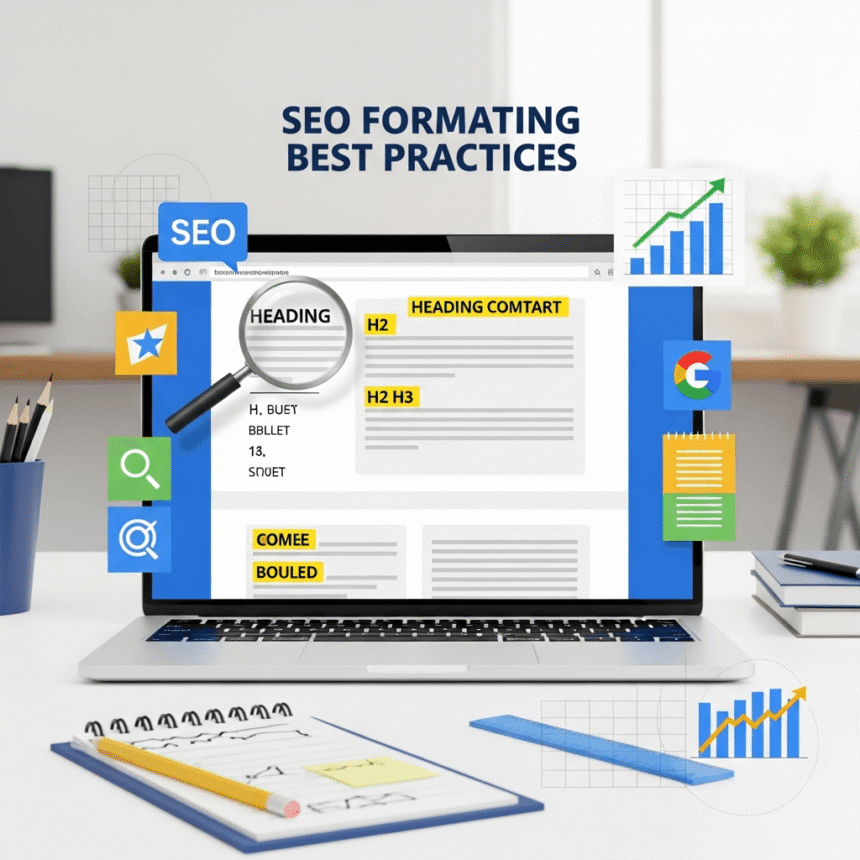
Headings help organize your thoughts. Use one H1 tag for your title and then use H2 and H3 tags for your subtopics. This creates a hierarchy that search engines use to figure out the main points of your page.
H1: The main title.
H2: Major sections.
H3: Sub-points within those sections.
2. Keep Paragraphs Short
People scan web content rather than reading every word. Aim for paragraphs that are only two to four sentences long. This creates “white space” on the page, which makes the text feel less overwhelming and much easier to digest on mobile devices.
3. Leverage Bullet Points and Lists
Lists are a gold mine for SEO. They are clear, concise, and often get picked up for “Featured Snippets” at the top of search results. Use bullet points for:
Key features or benefits.
Step-by-step instructions.
Summary points.
4. Bold Important Phrases
When you bold a keyword or a crucial sentence, you are telling the reader, “Pay attention to this.” It helps scanners find the answers they need quickly. Just be careful not to overdo it; if everything is bold, nothing stands out.
5. Add Internal and External Links
Linking to other pages on your site keeps visitors around longer. Linking to high-quality external sites shows search engines that you have done your research. Use descriptive anchor text for your links. Instead of saying “click here,” use a phrase like “advanced keyword research guide.”
6. Optimize Your Images
Search engines cannot “see” images, but they can read the text attached to them. Always include Alt Text for every image if You wanna see how click on this link “You gat it”. This text should describe what is in the photo while naturally using a keyword if it fits. Also, make sure your image file sizes are small so your page loads quickly.
7. Write a Compelling Meta Description
The meta description is the short summary that appears under your title in search results. While it is not a direct ranking factor, a well-written description improves your click-through rate. Think of it as a mini-advertisement for your post.
Summary
SEO formatting is about balance. You want to satisfy the technical requirements of search engines while providing a smooth, pleasant experience for your readers. By using headings, short paragraphs, and clear lists, you make your high-quality content accessible to everyone.