
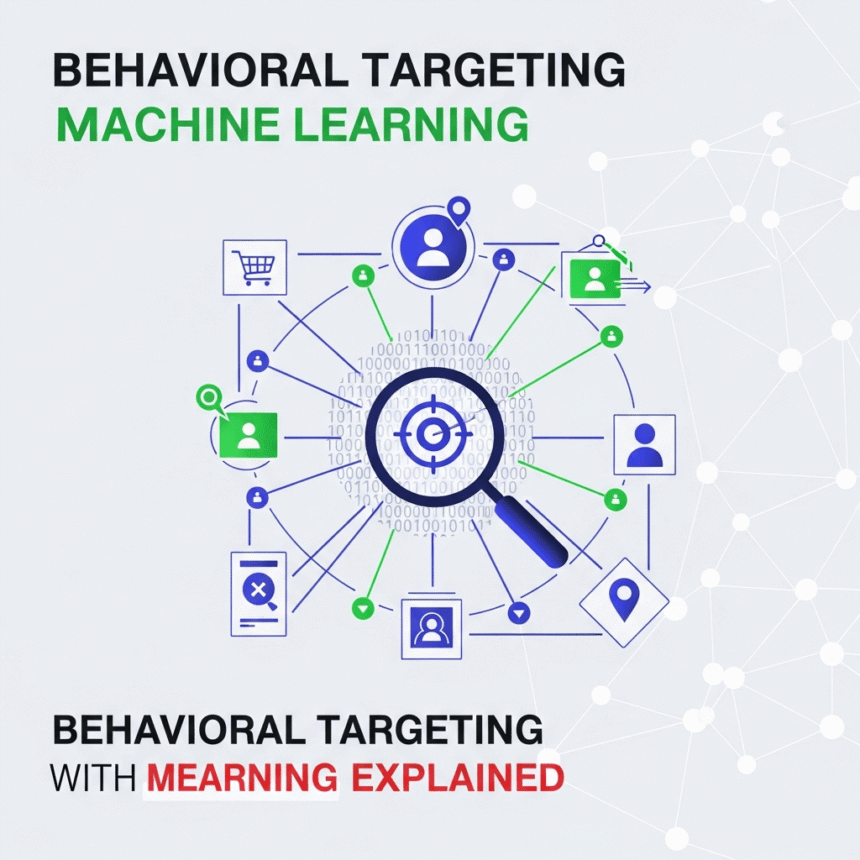

Have you ever noticed how, after looking at a pair of hiking boots online, ads for camping gear seem to follow you across the internet? It can feel like magic or maybe a little bit like you are being watched. In reality, it is a sophisticated process called behavioral targeting, and today, it is driven almost entirely by machine learning.
What is Behavioral Targeting?
At its core, behavioral targeting is about delivering the right message to the right person at the perfect time. Instead of showing the same advertisement to everyone, businesses look at what you do online to understand your interests.
This includes things like:
The pages you visit.
The links you click.
The amount of time you spend watching a video.
The items you leave in a shopping cart.
By collecting this data, companies can build a profile of your preferences. This ensures that a person interested in vegan cooking sees ads for plant-based recipes rather than high-end power tools.
The Role of Machine Learning
In the past, humans had to manually sort through data to create these groups. Today, the sheer volume of data is too massive for people to handle. This is where machine learning (ML) comes in.
Machine learning is a type of artificial intelligence that allows computers to learn from data without being explicitly programmed for every task. In the world of marketing, ML acts like a super-fast detective. It looks at millions of data points to find patterns that a human would never notice.
How the Process Works
The marriage of behavioral targeting and machine learning happens in a few key steps:
1. Data Collection
The system gathers raw information about user actions. This data is often “noisy,” meaning it contains a lot of extra information that might not be useful.
2. Pattern Recognition
The machine learning model analyzes the data. It might notice that users who read articles about marathon training are also very likely to buy high-protein snacks.
3. Predictive Modeling
Once the patterns are found, the system makes a prediction. If a new visitor arrives and starts reading about running shoes, the ML model predicts they will soon be in the market for a fitness tracker.
4. Real Time Delivery
The system then serves a personalized recommendation or content piece instantly. This happens in milliseconds while the page is loading.
Why This Matters for Businesses and Users
For businesses, this technology is incredibly efficient. It reduces waste because they aren’t spending money showing ads to people who have zero interest in their products.
For users, the experience is much more relevant. Instead of being bombarded with random, annoying content, you get suggestions that might actually solve a problem or spark an interest. When done well, it makes the internet feel more personalized and helpful.
The Importance of Privacy
While machine learning makes targeting very powerful, it must be balanced with privacy. Modern systems are moving toward “anonymized data,” where the machine knows what the user likes but doesn’t necessarily know their name or personal identity. Respecting user boundaries is now a key part of how these high-tech systems are built.