

In the early days of the internet, a flashing banner was enough to make someone click. Today, our brains have developed a “digital filter” that automatically skips over anything that looks like an advertisement. This is known as ad blindness or banner blindness.
When users land on a page, their eyes follow a specific path. They look for the headline, the main image, and the body text. Subconsciously, they ignore the sidebars and the top headers where ads usually live. For website owners and marketers, this is a major hurdle. If people don’t see the ads, they won’t click them, and your hard work doesn’t pay off.
The good news is that Artificial Intelligence (AI) is changing the game. By using smart technology, we can make ads feel less like “noise” and more like helpful recommendations. Here is how AI helps reduce ad blindness.
1. Hyper-Relevant Content Matching
The biggest reason people ignore ads is that they aren’t relevant. If you are reading a recipe for chocolate cake and see an ad for car insurance, your brain marks it as “useless” and moves on.
AI uses contextual targeting to solve this. It reads the content of your page in real-time and picks an ad that matches the topic perfectly. Instead of car insurance, the AI might show an ad for a high-quality baking spatula. When the ad matches the user’s current interest, they don’t see it as a distraction. They see it as a resource.
2. Dynamic Creative Optimization (DCO)
Usually, an ad is a static image. It stays the same for every visitor. AI-powered tools now use Dynamic Creative Optimization. This means the AI can change the colors, the image, or the “Call to Action” button based on who is looking at it.
If a user is browsing from a rainy city, the AI might show an image of someone using an umbrella.
If the user prefers minimalist designs, the AI can simplify the ad layout instantly.
By making the ad look fresh and tailored, AI breaks the “pattern” that our brains usually ignore.
3. Predictive Heatmaps and Better Placement
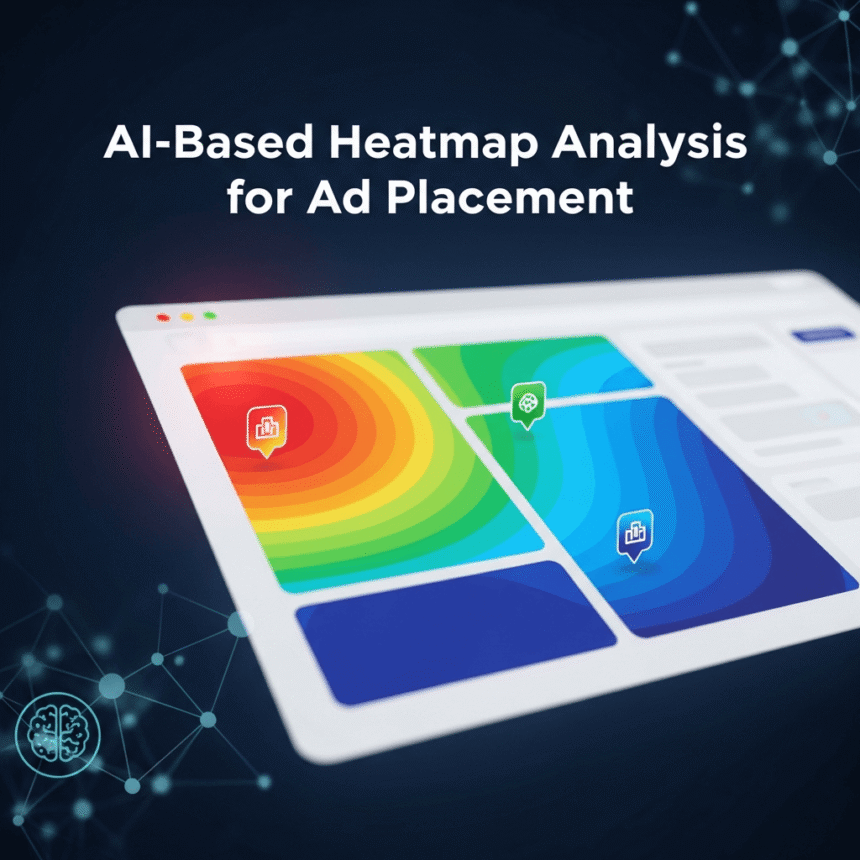
We often put ads where we think people look, but AI knows exactly where the eyes go. AI tools can analyze thousands of user sessions to create predictive heatmaps.
Instead of sticking a banner in the traditional (and ignored) right sidebar, AI might suggest placing a “native” ad right in the middle of the article text or at the end of a helpful tip. These non-standard placements catch the eye because they aren’t in the usual “dead zones” of a website.
4. Fighting “Ad Fatigue”
Showing the same ad to the same person ten times is a guaranteed way to cause ad blindness. AI monitors frequency capping. It tracks how many times a visitor has seen a specific ad. Once the AI detects that the user is no longer responding, it automatically swaps the ad for a different one. This keeps the experience fresh and prevents the user from “tuning out” your content.
5. Native Integration
AI helps create native ads that blend into the website’s design. These don’t look like flashy banners; they look like a “Recommended Reading” section or a sponsored helpful tip. Because the AI ensures the font, style, and tone match your site, users are much more likely to engage with them naturally.
Summary
Ad blindness isn’t going away, but it can be managed. By using AI to ensure relevance, vary the design, and find the best placements, you can turn ignored banners into valuable engagements. The goal isn’t to “trick” the reader, but to provide an ad experience that actually adds value to their time on your site.