

The world of digital advertising is changing fast. In 2026, it is no longer enough to just “run ads” and hope people see them. Today, advertisers and website owners are using advanced technology to make sure their ads actually end up in front of human eyes.
This is where viewability comes in. Ad viewability is a metric that tracks whether an ad was actually seen by a user. If an ad loads at the bottom of a page but the user never scrolls down, that ad wasn’t “viewable.” To solve this, many companies are now turning to artificial intelligence.
AI Systems for Ad Viewability Improvement
Artificial Intelligence (AI) has moved from being a luxury to a necessity. These systems help bridge the gap between simply displaying an ad and making sure it gets noticed. Here is how AI is changing the game for viewability.
1. Predictive Heatmaps and Placement
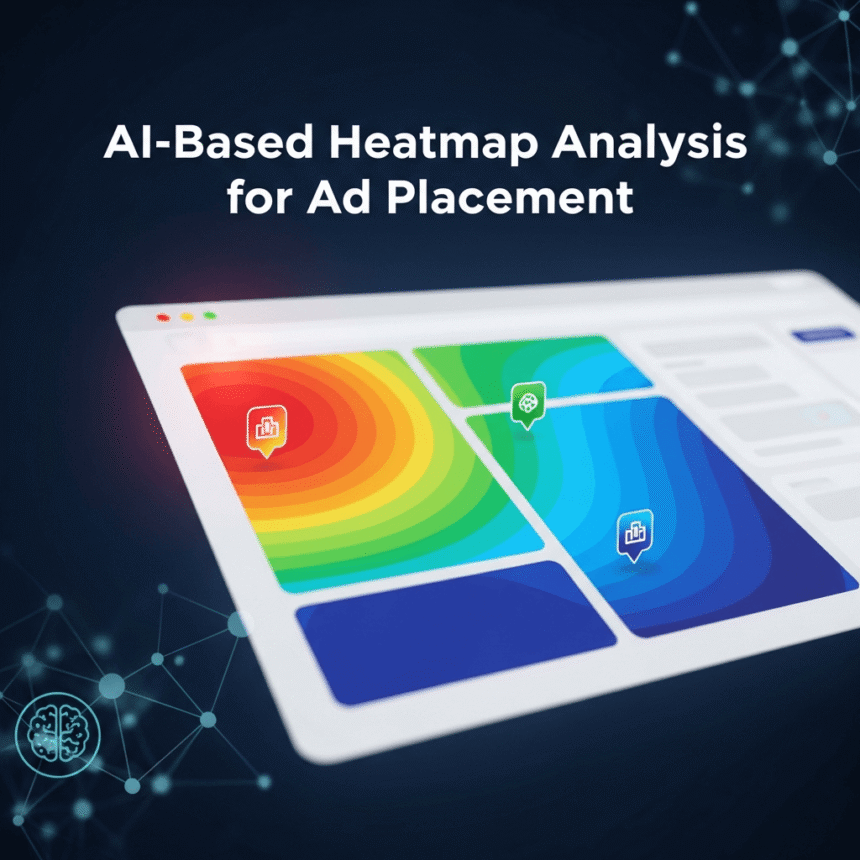
In the past, people guessed where to put ads based on basic layouts. AI now uses “predictive analytics” to look at millions of data points. These systems can predict where a user’s eyes will go before they even land on the page.
By analyzing mouse movements, scroll depth, and historical data, AI identifies the “hot zones” on a website. Placing an ad in these zones significantly increases the chance that a user will stay on that part of the screen long enough for the ad to be counted as viewable.
2. Smart Lazy Loading
Speed matters. If a website takes too long to load, users leave. “Lazy loading” is a technique where ads only load right before they are about to enter the user’s view.
AI makes this smarter by calculating the exact speed at which a user is scrolling. If a person is scrolling fast, the AI triggers the ad to load earlier. If they are reading slowly, it waits. This saves bandwidth and ensures that when the ad does appear, it is ready and visible instantly.
3. Contextual Relevance and Engagement
AI systems are excellent at understanding what a page is about. Through Natural Language Processing (NLP), AI can match the content of an ad to the content of the article.
When an ad is relevant to what a person is currently reading, they are more likely to stop and look at it. AI ensures that a person reading about “electric cars” sees an ad for a charging station rather than a random pair of shoes. This relevance keeps the user’s attention on the screen, improving viewability scores.
4. Real-Time Bidding and Filtering
In 2026, many ad networks have shifted to a model where they only pay for ads that are actually seen. AI agents now act as “gatekeepers” during the bidding process.
These agents analyze the “environment” of a website in milliseconds. If the AI detects that a certain ad slot has a history of low viewability or is buried too deep in the page, it will automatically lower the bid or skip it entirely. This protects budgets and pushes publishers to maintain high-quality layouts.
5. Combatting Ad Fraud
Not every “view” is a human view. Sophisticated bots can mimic human scrolling to make it look like an ad was seen. Modern AI systems are trained to spot the difference between human behavior and bot patterns.
By filtering out non-human traffic in real time, AI ensures that viewability metrics are honest. This builds trust between the people showing the ads and the companies paying for them.
The Future is Visible
As we move further into 2026, the focus is shifting away from simple clicks and toward “attention.” AI is the tool that makes this possible. By using smart placements, predictive loading, and better fraud detection, these systems ensure that every dollar spent on advertising has a real chance to connect with a person.
For website owners, staying ahead means embracing these AI-driven tools. It’s not just about filling space anymore; it’s about making every pixel count.