
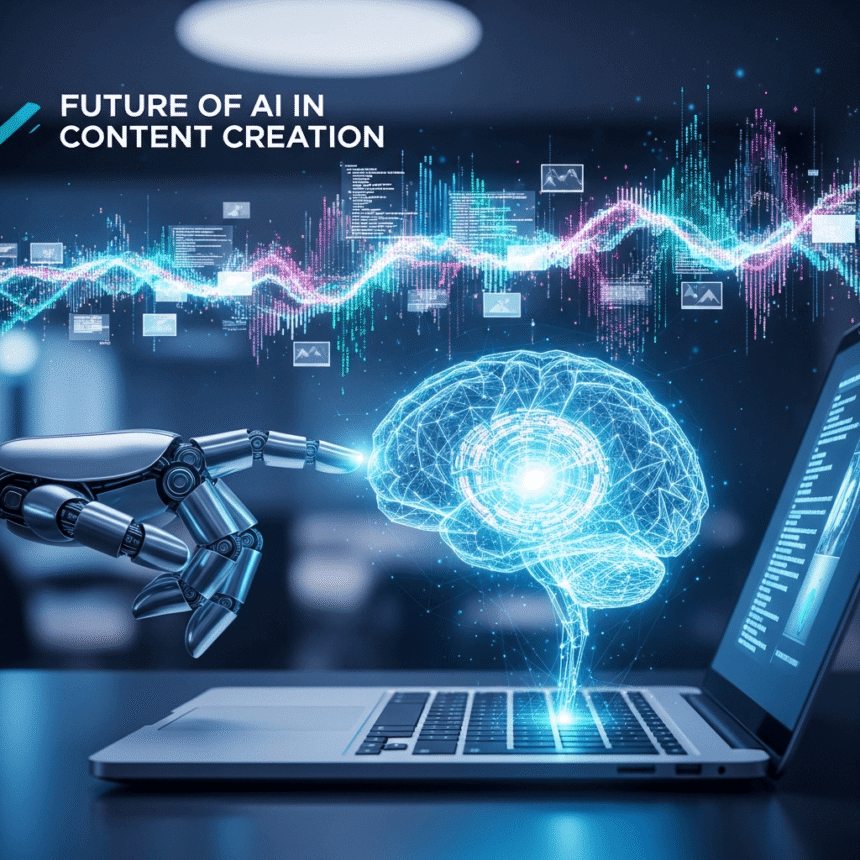

The world of making content is changing faster than ever. If you have written a blog post, edited a video, or designed a social media graphic lately, you have probably felt it. Artificial Intelligence is no longer just a fancy tool for tech experts. In 2026, it has become the engine behind how we share stories and information.
But what does the future actually look like? It is not about robots replacing people. Instead, it is about a new way of working together.
From Tools to Teammates
In the past, we used AI to fix spelling or suggest a few keywords. Today, the technology has evolved into a “strategic partner.” Instead of just following simple instructions, AI can now understand the context of what you are building.
Multimodal Creation: Future AI does not just write text. It can take one single idea and turn it into a blog post, a short video, and a set of images all at once.
Deep Research: Tools are now capable of scouring the live web to find facts, summarize long reports, and even spot trends before they become popular.
Brand Voice: New systems can be trained on your specific style. This means the AI learns how you talk, the jokes you tell, and the values you care about, so the content always feels like it came from you.
The Rise of AI Agents
We are moving away from simple chatbots toward “AI Agents.” An agent is different because it can take action. In the near future of content creation, an agent might not just write your newsletter; it could also schedule it, respond to basic comments from your readers, and update your website based on what people are clicking on.
This shift allows creators to move from “doing the work” to “directing the work.” You become the editor and the strategist while the AI handles the repetitive tasks that used to take hours.
Staying Human in a Digital World
With so much AI content being made, you might wonder if everything will start to look the same. This is actually where human creators become more important than ever.
As the internet gets filled with automated posts, people will crave “Human Proof.” This includes:
Personal Stories: AI cannot go for a walk, feel the sun, or experience a difficult life lesson. Your unique perspective is your superpower.
Emotional Connection: While AI can mimic feelings, it does not truly understand them. Only a human can tell a story that hits the heart in a way that feels real.
Trust and Truth: In a world of deepfakes, being an honest and transparent creator is a competitive advantage. People will follow brands and individuals they can actually trust.
Real World Impact
By 2026, the cost and time of making high-quality content have dropped significantly. A small team of three people can now run a global campaign that would have required a whole agency just a few years ago. Video production that used to take weeks now takes minutes, and language barriers are disappearing as AI translates and localizes content instantly.
The future of AI in content creation is bright, but it requires us to learn new skills. We must learn how to give better instructions, how to fact-check efficiently, and how to keep our “human spark” alive in every piece of content we publish.