

If you have been blogging for a while, you probably have a library of articles sitting in your archives. Many creators make the mistake of hit and run publishing: they write a post, share it once, and never look back.
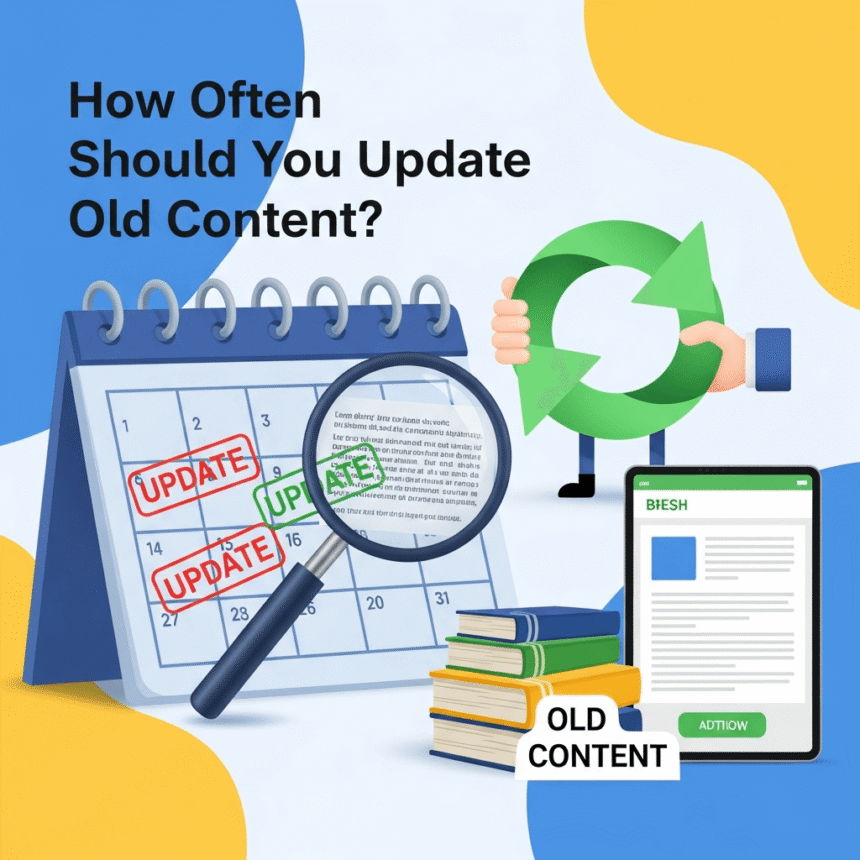
However, the secret to steady growth isn’t always writing something new. Often, the fastest way to get more visitors is to polish what you already have. But how often should you actually do it?
Why Updating Content Matters
Search engines love fresh information. When you update a post, you tell the internet that your site is active and your information is accurate. Beyond that, it builds trust with your readers. No one wants to follow a guide from 2021 that mentions tools or software that no longer exist.
The General Rule of Thumb
There is no single law for every website, but a good strategy is to review your top-performing content every 6 to 12 months.
If you are in a fast-moving industry like technology or news, you might need to check your posts every 3 to 4 months. If you write about timeless topics like history or philosophy, you can wait 2 years or more.
How to Decide Which Posts to Update First
You don’t have to update every single post at once. That would be exhausting. Instead, focus on these three categories:
The “Almost Famous” Posts: These are articles that rank on the second page of search results. A quick update could push them to the first page.
High Traffic, High Bounce Rate: If many people visit a page but leave immediately, the info might be outdated or the layout might be messy.
The Yearly Guides: If you have a post titled “Best Cameras for 2025,” you must update it as soon as the year changes.
Quick Checklist for Your Update
When you dive back into an old post, keep it simple. You don’t need to rewrite the whole thing. Follow these steps:
Check for Broken Links: Make sure all your external links still work.
Update the Facts: Check your dates, statistics, and screenshots.
Improve the Readability: Break up long paragraphs. Use more bullet points.
Refresh the Images: High-quality visuals make a post feel brand new.
Add New Insights: If you have learned something new about the topic since you first wrote it, add a “2026 Update” section.
Summary
Updating content is a marathon, not a sprint. By keeping your “evergreen” posts fresh, you ensure that your site remains a reliable resource. This keeps visitors coming back and helps you stay relevant without the constant pressure of staring at a blank page.