

Finding the best way to get people to your website is a big challenge. If you are a business owner or a blogger, you have likely heard two terms many times: SEO and Paid Traffic.
Both have the same goal of getting your site in front of people. However, they work in very different ways. Choosing between them depends on your budget, your goals, and how fast you need to see results.
This guide will break down the differences between SEO and Paid Traffic so you can decide which path is right for your website in 2026.
What is SEO?
SEO stands for Search Engine Optimization. It is the process of making your website better so that search engines like Google show it to people for free.
When you use SEO, you are not paying the search engine to show your link. Instead, you are “earning” your spot at the top by providing high-quality content and a fast, easy-to-use website.
The Pros of SEO
- It is Cost-Effective: While you might spend money on a writer or a developer, you do not pay for every person who clicks on your link.
- Builds Trust: Most people trust organic results more than ads. Seeing a site at the top of the page naturally makes it look like an expert in that topic.
- Long-Term Results: A good blog post can bring in visitors for years. It is an asset that keeps working even when you are sleeping.
The Cons of SEO
- It is Slow: You will not see results overnight. It often takes months for Google to trust a new site and rank it highly.
- Algorithm Changes: Search engines update their “rules” often. Sometimes, a change can cause your traffic to drop suddenly.
What is Paid Traffic?
Paid traffic is exactly what it sounds like. You pay a platform to show your website to users. The most common type is “pay-per-click,” where you only pay when someone actually clicks on your ad.
The Pros of Paid Traffic
- Instant Results: As soon as you start your campaign, your website appears at the top. You can get visitors within minutes.
- Perfect Targeting: You can choose exactly who sees your ads based on their age, where they live, what they like, and even what they have searched for recently.
- Consistent Flow: As long as you have a budget, you have traffic. It is very predictable.
The Cons of Paid Traffic
- It Stops When You Stop Paying: The moment you run out of money or turn off the ads, your traffic drops to zero. You are essentially “renting” your visitors.
- Costs Can Rise: If many people want to show ads for the same word, the price goes up. This can make it expensive for small businesses.
Side-by-Side Comparison
| Feature | SEO (Organic) | Paid Traffic |
| Speed | Slow (Months) | Fast (Minutes) |
| Cost | “Free” (Time/Labor) | Paid (Budget per click) |
| Trust | High | Medium to Low |
| Effort | High (Content & Tech) | High (Ad Management) |
| Sustainability | Very High | Low |
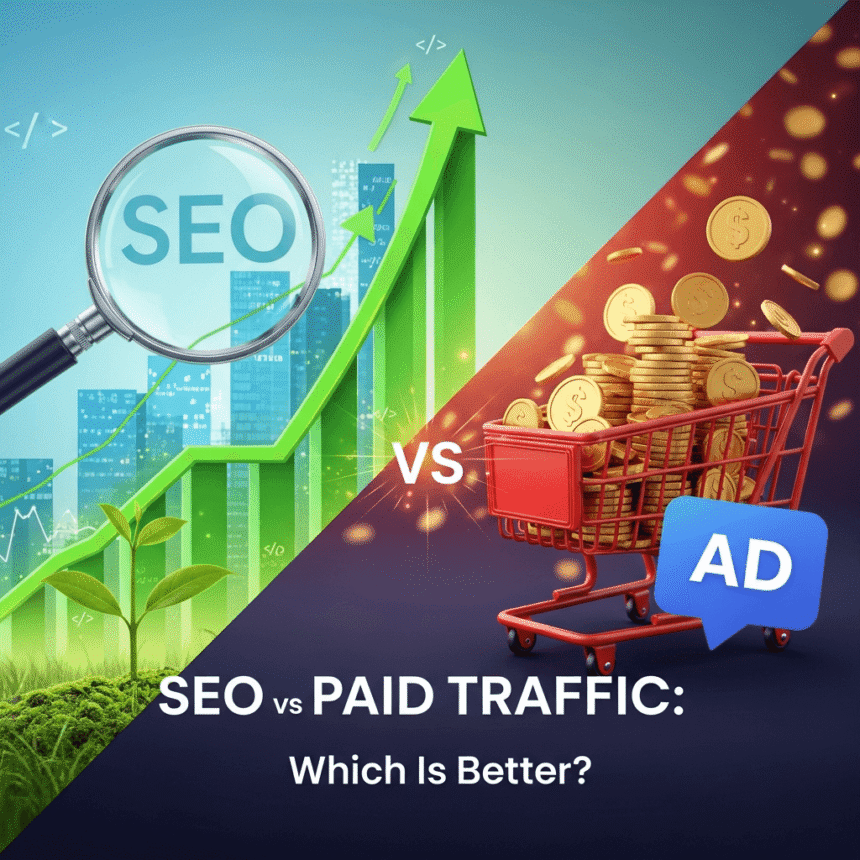
SEO vs Paid Traffic: Which Is Better?
There is no single winner. The “better” option depends on what your business needs right now.
Choose SEO If:
- You have a tight budget: If you can’t afford to pay for every click, focus on creating great content.
- You want to build a brand: If you want to be seen as a leader in your industry, organic rankings are essential.
- You are thinking long-term: If you want a website that grows in value over the next few years, SEO is the way to go.
Choose Paid Traffic If:
- You are launching something new: If you have a new product or a limited-time sale, you need people to see it today, not in six months.
- You need to test an idea: Paid ads are great for seeing if people actually want what you are selling before you spend months on SEO.
- You have a specific target: If you only want to reach 30-year-old gardeners in Seattle, paid ads are much more precise.
The Secret: Using Both Together
The most successful websites do not choose just one. They use a “Hybrid Strategy.”
They use paid traffic to get sales and data quickly while using SEO to build a foundation for the future. For example, you can use paid ads to find out which keywords lead to the most sales, and then focus your SEO efforts on those specific keywords.
By balancing both, you ensure that you have visitors today and a healthy, growing website for tomorrow.