
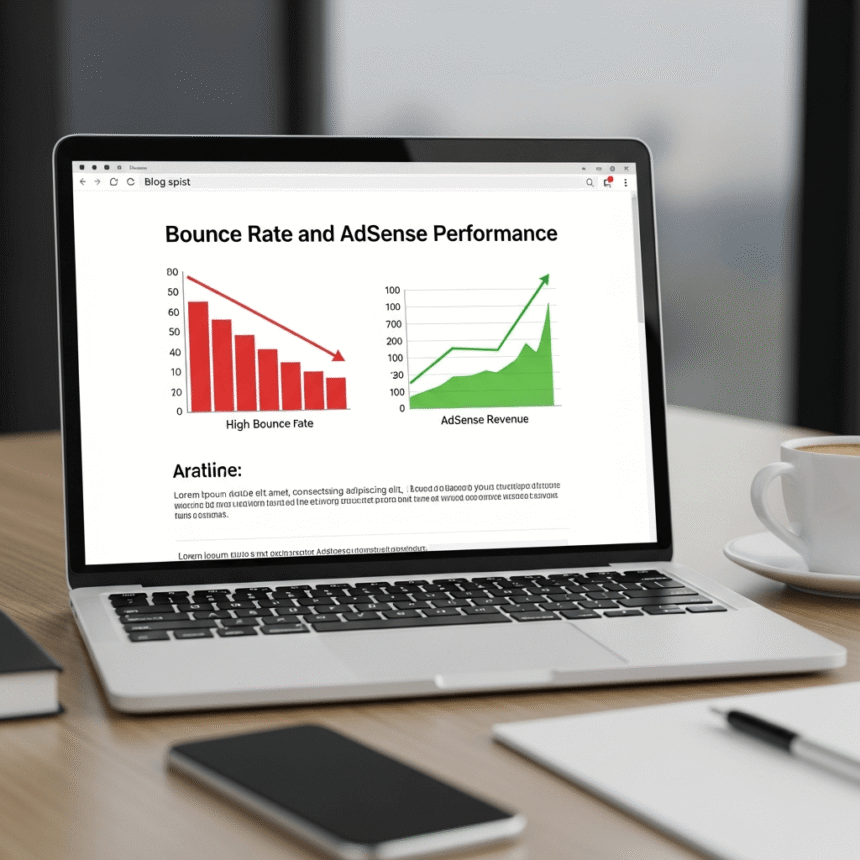

When someone visits your website and leaves after looking at only one page, that is called a “bounce.” If this happens often, you have a high bounce rate. For anyone running a website that earns money through ads, a high bounce rate is more than just a statistic; it is a sign that you are losing potential revenue.
Understanding the link between how people behave on your site and how your ads perform is the key to growing your online business.
What is Bounce Rate?
Imagine someone walks into a physical store, looks at the first item near the door, and immediately walks out without checking anything else. That is exactly what a bounce is in the digital world.
In technical terms, your bounce rate is the percentage of visitors who leave your site after viewing only the landing page. They do not click on another article, they do not sign up for your newsletter, and they do not click an ad.
Why a High Bounce Rate Hurts Ad Performance
High bounce rates and ad performance are closely tied together. When visitors leave quickly, your ads suffer in three main ways:
- Fewer Ad Impressions: If a user only views one page, you only get one chance to show them ads. If they stay and read three articles, you have tripled your opportunities to earn.
- Lower Viewability: Many ads are placed in the middle or at the bottom of a page. If a user “bounces” within seconds, they likely never scrolled down far enough to even see those ads. Advertisers prefer sites where ads are actually seen.
- Poor Quality Signals: Modern advertising systems are smart. They track how long people stay on your site. If users consistently leave your site quickly, the system may decide your content is not valuable. This can lead to fewer high-quality ads being shown on your pages.
Simple Ways to Lower Your Bounce Rate
Improving your site does not have to be complicated. Here are the most effective strategies to keep people on your site longer.
1. Speed Up Your Loading Time
People are impatient. If your website takes more than three seconds to load, most visitors will click the “back” button before they see a single word. Use smaller image files and avoid heavy plugins that slow things down.
2. Make Your Content Easy to Scan
Most people do not read every word on a screen; they scan. Use clear headings, short paragraphs, and bullet points. If a visitor can quickly see that your page has the answer they need, they are more likely to stay and finish reading.
3. Use Internal Links
At the end of your post, suggest another related article. Phrases like “You might also like…” or “Read more about…” guide the visitor to a second page. This immediately “breaks” the bounce and keeps the session alive.
4. Optimize for Mobile Users
More than half of all web traffic comes from phones. If your site looks messy or is hard to navigate on a mobile screen, users will leave instantly. Ensure your buttons are easy to tap and your text is large enough to read without zooming.
The Bottom Line
A low bounce rate means your visitors are happy, engaged, and spending time with your content. This creates a “win-win” situation: your readers get the information they want, and your ads get the attention they need to perform well.
By focusing on user experience, you aren’t just fixing a number in your analytics; you are building a more profitable and professional website.