

When you are building a website, understanding how ads work is the first step toward creating a better experience for your visitors. You might have noticed that some ads feel like they belong on the page, while others feel like they are following you from a previous search.
These two experiences represent the two main ways ads are served: Contextual and Interest-Based.
In this guide, we will break down the differences between these two methods so you can understand which one might be appearing on your site and why it matters.
What are Contextual Ads?
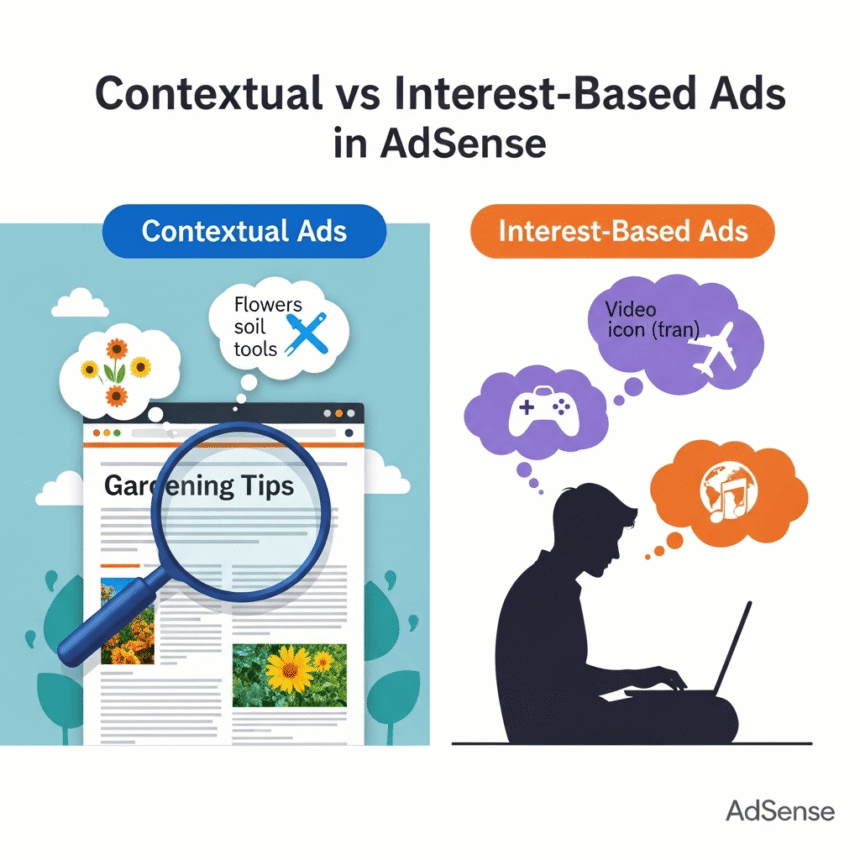
Contextual advertising is all about the here and now. It looks at the specific content of a webpage and places ads that match that topic.
Imagine you are reading a blog post about the best cameras for travel. If you see an ad for a camera lens or a tripod on that same page, that is a contextual ad. The system scans the text, keywords, and images of your article to understand the topic, then serves an ad that is relevant to that specific subject.
The Benefits of Contextual Ads
- Privacy Friendly: These ads do not need to track a user’s history across the web. They only care about what is on the page at that moment.
- Relevance: Because the ad matches the content, it feels like a natural part of the reading experience.
- Safe for Brands: Advertisers can choose to show their ads only on high-quality pages that fit their brand image.
What are Interest-Based Ads?
Interest-based ads (often called behavioral ads) focus on the person, not the page. These ads are based on a user’s past actions, such as websites they have visited, products they have searched for, or videos they have watched.
If a visitor comes to your travel blog but recently spent an hour looking at office chairs on another site, they might see an ad for an office chair while reading your travel article. Even though the ad has nothing to do with travel, it is highly relevant to that specific visitor’s recent interests.
The Benefits of Interest-Based Ads
- Personalization: These ads can be very effective because they target what a person is already looking to buy.
- Higher Engagement: Sometimes a user is more likely to click on something they were searching for yesterday than something related to the article they are reading today.
- Wider Reach: It allows advertisers to find their “ideal customer” no matter what part of the internet that person is currently visiting.
Contextual vs. Interest-Based: Key Differences
To help you see the differences clearly, here is a quick comparison:
| Feature | Contextual Ads | Interest-Based Ads |
| Focus | The content of the page. | The behavior of the user. |
| Data Used | Keywords and topics on the site. | Browsing history and past clicks. |
| Privacy | High (no user tracking needed). | Lower (relies on tracking data). |
| Example | A shoe ad on a fitness blog. | A shoe ad on a weather site because you looked at shoes earlier. |
Which One is Better for Your Website?
The truth is that most modern ad systems use a mix of both. You don’t usually have to choose one over the other. The system will automatically decide which type of ad is more likely to be helpful to the visitor at that specific moment.
If you have a very niche website, like a blog dedicated strictly to “Vegan Cupcake Recipes,” contextual ads will likely perform very well because your visitors are in a specific mindset. However, interest-based ads help you earn from visitors who might just be passing through but have a high intent to buy something else.
Final Thoughts
Understanding the “why” behind the ads on your site helps you create better content. Whether the ads match your words or your visitors’ habits, the goal is always the same: to provide value without being a distraction.
By focusing on high-quality, helpful content, you give the ad system more “context” to work with, which usually leads to better-tasting ads for your audience.