
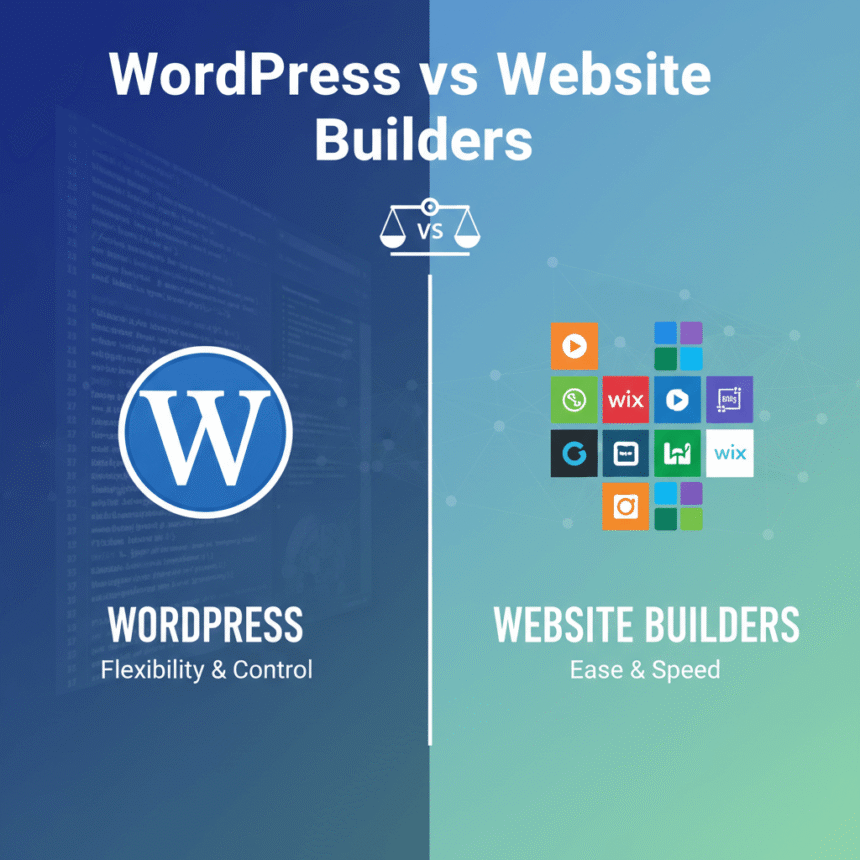

Choosing the right platform to build your online home is one of the most important decisions you will make. It is often a choice between the massive flexibility of WordPress and the sleek convenience of modern website builders like Wix, Squarespace, or Shopify.
Both paths can lead to a beautiful website, but they work in very different ways. This guide will break down the differences in simple terms to help you decide which is right for your goals.
To understand the difference, think of a website builder like renting a fully furnished apartment. The furniture is already there, the utilities are set up, and the landlord handles the repairs. However, you cannot knock down a wall or change the layout of the kitchen.
WordPress is more like buying a plot of land and building a house. You have to arrange the plumbing and electricity yourself, but you can build as many rooms as you want and design them exactly how you like.
What is a Website Builder?
Website builders are all-in-one services. When you pay for a subscription, you get everything in one package:
- The tool to design your site.
- A place to host your files.
- Security and technical updates.
- Customer support.
Everything is managed through a “drag and drop” interface. If you want a picture on your page, you simply grab it with your mouse and move it where you want it to go.
What is WordPress?
When people talk about WordPress in this context, they usually mean the self-hosted version (WordPress.org). It is a free software that you install on your own web server.
- Hosting: You must choose and pay for a separate hosting company to store your site.
- Ownership: You own everything. You can move your site to a different company whenever you want.
- Plugins: You can add almost any feature imaginable by installing “plugins,” which are like apps for your website.
Ease of Use
Website Builders win this category for beginners. You can sign up and have a basic site live in less than an hour. The tools are designed to be intuitive, so you do not need to know any code or technical terms.
WordPress has a steeper learning curve. You need to learn how to manage a dashboard, keep your software updated, and navigate different settings. It is not “hard,” but it takes a few days of practice to feel comfortable.
Design and Flexibility
Website Builders provide beautiful templates. These look professional right out of the box. The downside is that you are often stuck within the limits of that template. If you want a very specific feature that the builder doesn’t offer, you might be out of luck.
WordPress is the king of customization. There are tens of thousands of themes and plugins available. Whether you want to start a simple blog, a complex forum, or a membership site, WordPress can do it. You have total control over every pixel on the screen.
Cost Comparison
At first glance, WordPress seems cheaper because the software is free. However, you still have to pay for:
- Monthly web hosting.
- A domain name (your web address).
- Premium themes or plugins (optional).
Website builders usually charge a flat monthly or yearly fee. While this fee might look higher than basic hosting, it includes everything. For a simple site, the costs are often similar. For a large, growing business, WordPress can actually become the more affordable option because you aren’t forced into expensive “pro” tiers as your traffic grows.
Who Should Choose a Website Builder?
A website builder is likely your best bet if:
- You need a website up and running today.
- You want a “set it and forget it” solution where you don’t have to worry about security or updates.
- You are building a simple portfolio, a local business page, or a personal hobby site.
Who Should Choose WordPress?
WordPress is the better choice if:
- You plan to grow your site into a large business or a busy blog.
- You want full ownership of your data and don’t want to be tied to one company’s rules.
- You need advanced features like a learning platform or a complex directory.
Final Thoughts
The choice depends on your “technical appetite” and your long-term goals. If you want the easiest path, go with a builder. If you want the most powerful path, choose WordPress. Both are great tools that have helped millions of people share their ideas with the world.