

Generating content with AI is fast, but making sure that content is actually good requires a human touch. If you want your blog to stand out and keep readers coming back, you need to treat AI as a draft creator, not a final publisher.
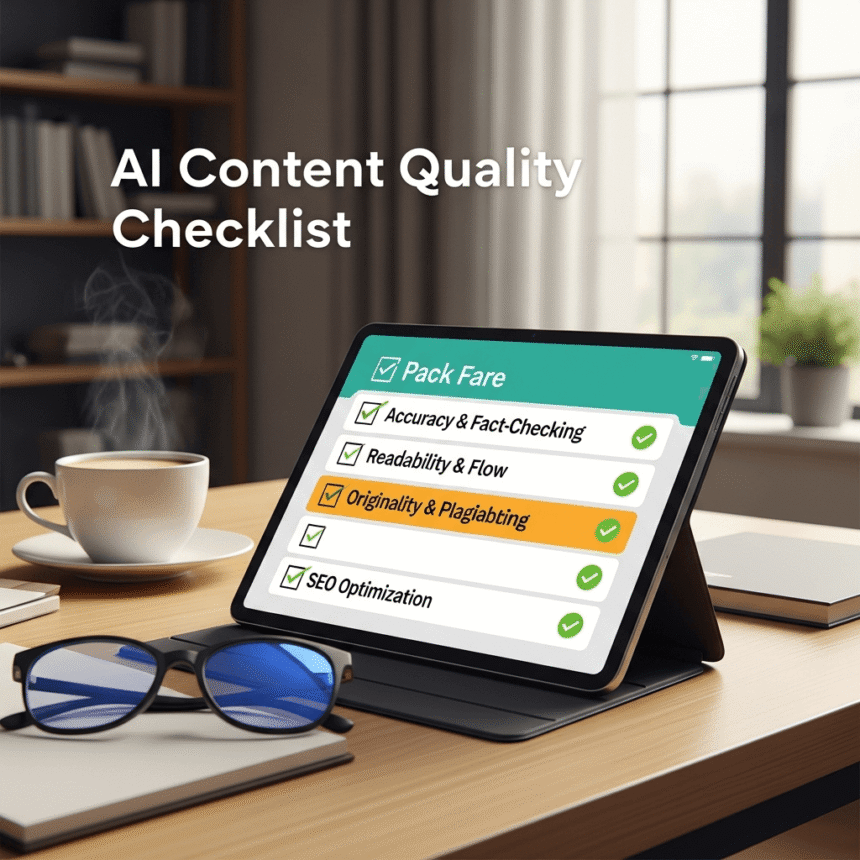
Use this checklist to ensure every piece of AI-assisted content you publish meets high standards for quality, accuracy, and readability.
1. Accuracy and Fact-Checking
AI models can sometimes “hallucinate” or state facts that are outdated. This is the most critical step in your process.
- Verify all dates and statistics: Double-check any numbers or historical dates against reliable sources.
- Check the links: If the AI suggested URLs, click them to make sure they are real and relevant.
- Audit technical claims: If the post explains “how-to” steps, try them out yourself to ensure they work.
2. Brand Voice and Personality
AI tends to write in a very neutral, slightly robotic tone. To attract loyal visitors, your content needs a unique “soul.”
- Remove “AI-isms”: Delete overused words like “delve,” “unleash,” “tapestry,” or “comprehensive guide.”
- Inject personal stories: AI cannot share personal experiences. Add a paragraph about a time you faced the problem you are writing about.
- Adjust the tone: Ensure the writing matches your brand. Is it professional? Playful? Sarcastic? Make those adjustments manually.
3. Readability and Flow
Even if the information is correct, people will leave your site if the text is hard to read.
- Shorten the sentences: AI often creates long, winding sentences. Break them into two.
- Use white space: Ensure you have short paragraphs (2 to 3 sentences each) to make the post easy to skim on mobile devices.
- Read it out loud: If you stumble over a sentence while reading it, your readers will too. Rewrite it for better flow.
4. Value and Originality
Search engines and readers both love “Information Gain.” This means providing something new that isn’t already on ten other websites.
- Add expert quotes: Reach out to someone in your industry or include a unique perspective that the AI wouldn’t know.
- Include custom visuals: Don’t just rely on text. Use screenshots, charts, or original photos to support your points.
- Answer the “So What?”: Make sure the conclusion gives the reader a clear action to take.
5. SEO and Structure
While the content must be for humans, it still needs to be organized so search engines can find it.
- Check your headings: Use H2 and H3 tags correctly to create a logical map of the content.
- Optimize the Meta Description: Write a custom summary that encourages people to click when they see your post in search results.
- Internal Linking: Link to at least two or three other posts on your own website to keep visitors reading more of your work.
Final Review
Before you hit publish, ask yourself one question: “Would I find this useful if I found it on the internet?”
If the answer is yes, you are ready to go. By following this checklist, you turn basic AI output into a high-quality asset that builds trust with your audience and grows your website traffic over time.