

In the early days of the internet, waiting for a website to load was normal. We expected to see images slowly appear line by line. Today, things are very different. If a website takes more than a few seconds to load, most people will leave and find a faster alternative.
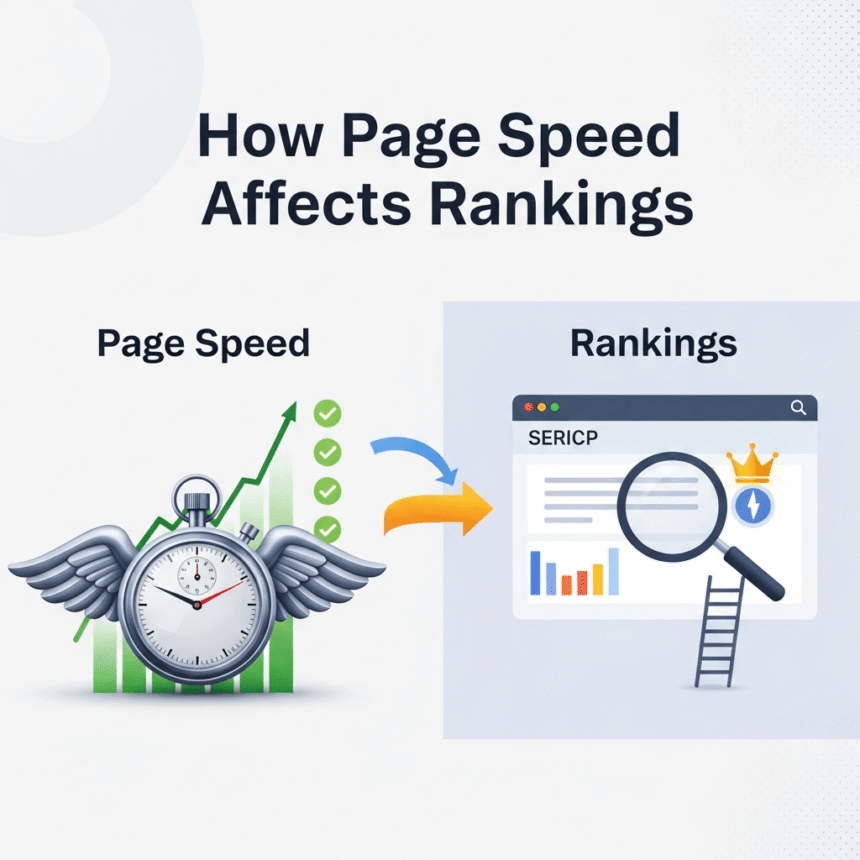
Search engines like Google understand this behavior. Their goal is to provide the best possible experience for their users. Because of this, page speed has become a critical factor in determining where your website appears in search results.
What is Page Speed?
Page speed is the amount of time it takes for the content on a specific webpage to fully display. It is often confused with site speed, which is the average speed of several pages on a website.
There are different ways to measure speed. Some tools look at how long it takes for the first piece of information to appear. Others look at how long it takes for a user to actually be able to click on a button or scroll down the page.
Why Google Cares About Speed
Google uses page speed as a ranking signal for both desktop and mobile searches. The reason is simple. User experience is a priority.
When a user clicks on a search result and the page loads instantly, the user is happy. If the page is slow, the user gets frustrated. Google wants to recommend websites that make people happy. If your site is slow, Google might rank a faster competitor above you, even if your content is slightly better.
The Impact on Mobile Users
Mobile browsing has overtaken desktop browsing globally. Mobile devices often rely on slower data connections or unstable Wi-Fi. This makes page speed even more important for mobile SEO.
Google uses mobile first indexing. This means Google primarily looks at the mobile version of your website to decide your ranking. If your mobile site is slow, your overall rankings will likely suffer across all devices.
How Speed Influences User Behavior
Page speed does not just affect your ranking directly through Google’s math. It also affects how users interact with your site, which sends signals back to search engines.
- Bounce Rate: This is the percentage of visitors who leave your site after viewing only one page. If a page takes five seconds to load, the probability of a visitor leaving increases dramatically. High bounce rates can signal to search engines that your page is not useful.
- Dwell Time: This is how long a person stays on your page. Faster pages encourage people to stay and read.
- Conversion Rate: If you are trying to sell a product or get someone to sign up for a newsletter, speed is your best friend. People are more likely to complete a purchase on a fast, responsive site.
Key Factors That Slow Down Your Site
To improve your speed, you first need to know what is causing the delays. Here are the most common culprits:
- Large Images: High resolution photos look great, but they carry a lot of data. Unoptimized images are the biggest reason for slow pages.
- Too Many Plugins: If you use a website builder like WordPress, it is easy to add too many features. Each plugin adds extra code that the browser must process.
- Slow Hosting: Your website lives on a server. If that server is cheap or overloaded, it will take a long time to send data to your visitors.
- Complex Code: Extra spaces, long comments, and messy code can make a file larger than it needs to be.
How to Improve Your Page Speed
Improving your speed might seem technical, but many of the best fixes are quite simple.
- Compress Your Images: Use tools to reduce the file size of your photos without losing quality.
- Enable Caching: This allows a visitor’s browser to store parts of your site so it doesn’t have to download everything again on their next visit.
- Use a Content Delivery Network (CDN): A CDN stores copies of your site on servers all over the world. This ensures that a visitor in London gets data from a server in London, rather than one in New York.
- Clean Up Your Code: Minify your CSS and JavaScript files to remove unnecessary characters.
Measuring Your Success
You cannot fix what you do not measure. Use free tools like Google PageSpeed Insights. These tools give you a score and a list of specific things you can change to make your site faster.
Final Thoughts
Page speed is no longer just a technical detail for developers. It is a vital part of your marketing and SEO strategy. By making your site faster, you are not just pleasing search engine algorithms. You are providing a better service to your visitors.
A fast website builds trust. It shows your audience that you value their time. In the competitive world of search rankings, a few seconds can be the difference between being on the first page or being invisible.