
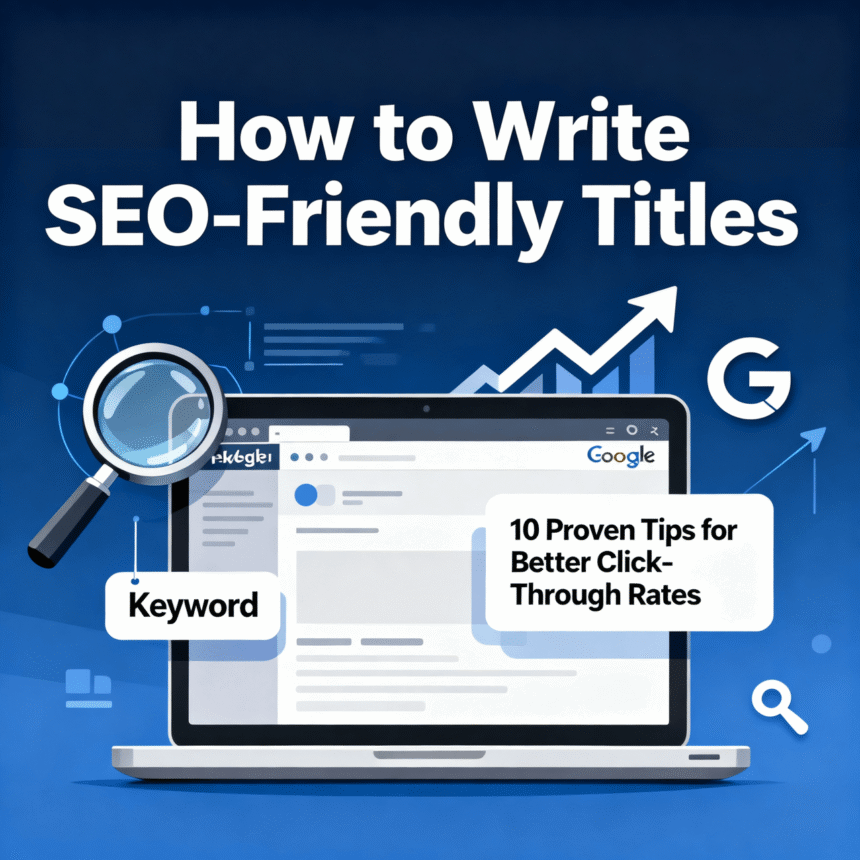

The title of your blog post is the very first thing a person sees when they search for something on the internet. It acts like a digital storefront. If it looks interesting and relevant, people will click on it. If it looks boring or confusing, they will scroll right past it.
Writing a title that pleases both humans and search engines is a bit of an art. Here is a simple guide to help you master SEO-friendly titles.
Keep it Under 60 Characters
Search engines like Google usually show the first 50 to 60 characters of a title. If your title is too long, it will get cut off in the search results. When a title ends abruptly with three dots, users might not understand what the page is about.
Try to put the most important information at the beginning. This ensures that even if the end is hidden, the main message still gets through to the reader.
Use Your Main Keyword Early
Keywords are the words people type into search bars. If you want your post to show up when someone searches for “healthy breakfast,” that phrase needs to be in your title.
Placing your keyword near the start of the title helps search engines understand your topic quickly. It also tells the reader immediately that your page has the answers they are looking for.
Match the Search Intent
Search intent is the reason why someone is searching for a specific topic. Are they looking to buy something? Are they looking for a tutorial? Or are they just looking for a quick fact?
Your title should reflect what is actually on the page. If your title promises a “Step-by-Step Guide” but your article is just a short opinion piece, readers will leave your site quickly. This tells search engines that your content isn’t helpful, which can hurt your rankings.
Use Numbers and Power Words
Numbers are very effective in titles. They give the reader a clear idea of what to expect. For example, “5 Ways to Save Money” sounds more manageable than “How to Save Money.”
Power words are descriptive words that trigger an emotional response or curiosity. Words like “Easy,” “Proven,” “Ultimate,” or “Fast” can make a title much more clickable. Just make sure you don’t overdo it. You want to be exciting but honest.
Avoid Keyword Stuffing
It might be tempting to jam as many keywords as possible into one title. An example would be “Best SEO Titles Writing SEO Titles for SEO Growth.” This looks like spam to search engines and it is very hard for humans to read.
Write for people first. A natural, clear title will always perform better in the long run than a list of keywords.
Ask a Question
Sometimes, the best title is a question that your audience is already asking. If your post answers a specific problem, try phrasing the title as a question. For example, “How Do I Fix a Flat Tire?” directly targets the user’s need. When a user sees their exact question as a headline, they are very likely to click on it.
Writing great titles takes practice. By keeping them short, using the right keywords, and focusing on the reader’s needs, you can improve your chances of ranking higher and getting more clicks.