

If you want to grow your website, you need to understand that not all search terms are created equal. When someone types a word into a search engine, they have a specific goal in mind. In the world of digital marketing, we call this search intent.
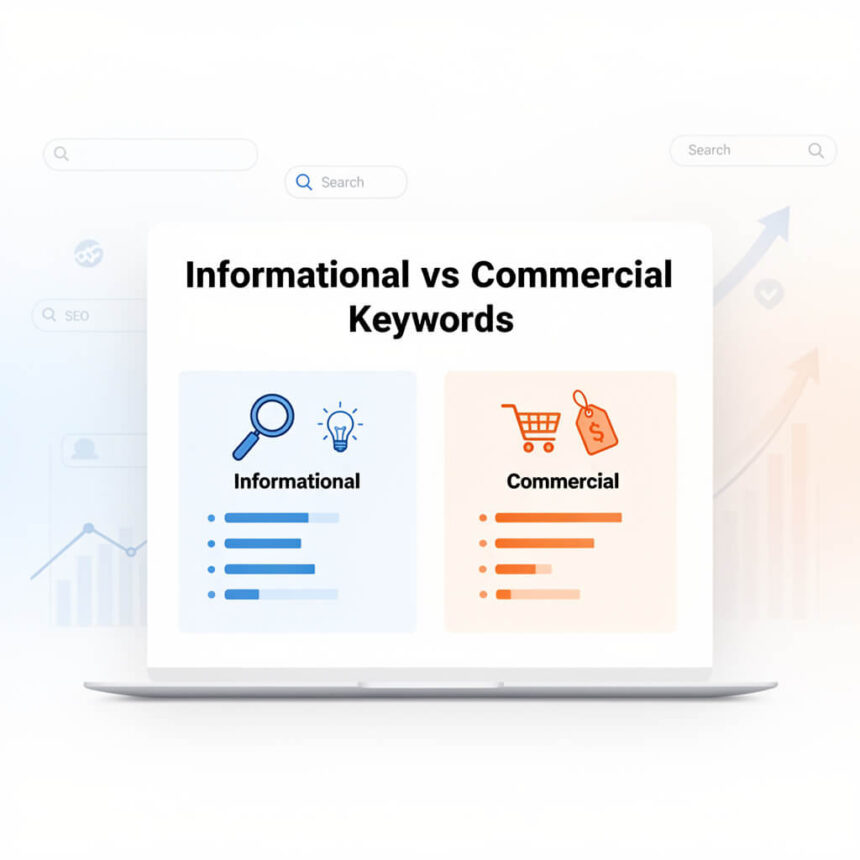
To get the right kind of visitors, you need to balance two main types of phrases: informational keywords and commercial keywords. Knowing the difference between them will help you create content that actually meets your readers’ needs.
What are Informational Keywords?
Informational keywords are used when a person is looking for knowledge. These users aren’t looking to buy anything yet. They have a question, a problem, or a curiosity they want to satisfy.
Common words found in informational searches include:
- How to
- What is
- Ways to
- Guide
- History of
Example: If someone searches for “how to maintain a mountain bike,” they are looking for a tutorial. They want to learn a skill, not necessarily spend money at that exact moment.
Why they matter: These keywords help you build trust. When you provide helpful answers for free, you become an authority in your field. This brings a high volume of traffic to your site and introduces your brand to new people.
What are Commercial Keywords?
Commercial keywords (often called “investigational” or “high intent” keywords) are used when someone is thinking about making a purchase. These users are further along in their journey. They know what they need, but they are still comparing options or looking for the best deal.
Common words found in commercial searches include:
- Best
- Review
- Top 10
- Vs (Comparison)
- Cheap or Affordable
Example: If that same person now searches for “best mountain bike helmets 2026,” they are in a shopping mindset. They are looking for recommendations because they intend to buy a helmet soon.
Why they matter: These keywords are much more likely to lead to a sale or a signup. While fewer people might search for these specific terms compared to general information, the people who do search for them are “warm” leads.
The Key Differences
The main difference lies in the user’s mindset.
- Traffic Volume: Informational keywords usually have much higher search volumes. Millions of people want to know “how to stay healthy,” while only a few thousand might look for a “specific brand of vitamins.”
- Conversion Rate: Commercial keywords have a higher conversion rate. A visitor reading a product review is much closer to clicking “buy” than someone reading a history of the product.
- Content Style: Informational content is usually long, educational, and detailed. Commercial content is often structured as lists, tables, or pros and cons.
How to Use Both on Your Blog
A successful blog uses a mix of both. If you only focus on informational topics, you will have lots of readers but no revenue. If you only focus on commercial topics, your site might look like a giant advertisement, and people won’t trust you.
The Strategy:
Start by answering “How to” questions related to your niche to bring people in. Within those articles, you can naturally mention the tools or products that help solve the problem. This creates a bridge between “learning” and “buying.”
For instance, a blog post about “How to start a garden” (Informational) can easily link to a post about the “Best gardening tools for beginners” (Commercial).
Summary
Understanding the intent behind a keyword allows you to speak directly to what the user wants. Use informational keywords to grow your audience and build a reputation. Use commercial keywords to turn that audience into customers. When you master both, your website becomes a powerful tool for growth.