
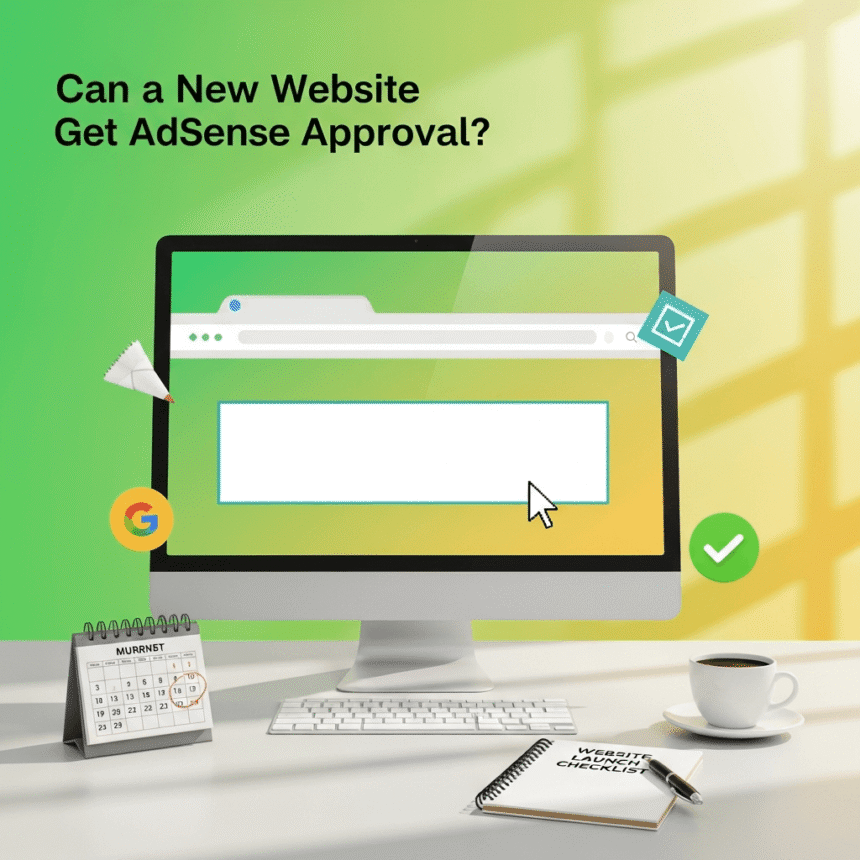

The short answer is yes. Age is not the only factor that determines whether a site is ready. While some regions have specific recommendations for how long a domain should be active, the most important factors are the quality of your content and the structure of your website.
1. Create High-Quality and Unique Content
The most important rule is to provide value. If your website only contains information that can be found on a thousand other sites, it may be rejected for “Low Value Content.”
- Originality: Always write your own articles. Avoid copying and pasting from other sources.
- Depth: Aim for articles that are at least 800 to 1,000 words long. This shows that you are providing a deep look into your topic.
- Quantity: You do not need hundreds of posts. Usually, 15 to 20 well-written, high-quality articles are enough to show that your site is active.
2. Set Up Essential Pages
A professional website is not just a collection of blog posts. You need to show that your site is a legitimate business or project. To do this, you must have these three pages:
- About Us: Tell your visitors who you are and what the goal of your website is.
- Contact Us: Give people a way to reach you. A simple contact form or an email address works well.
- Privacy Policy: This is a legal requirement. It explains to users how you handle their data. Without this page, your application will almost certainly be rejected.
3. Focus on Website Navigation and Design
Your website needs to be easy to use. If a person (or a computer program) cannot find their way around your site, it will not be approved.
- Simple Menus: Use a clear menu bar at the top of your page. Group your posts into categories so they are easy to find.
- Mobile Friendly: Most people browse the web on their phones. Make sure your website looks good and works well on small screens.
- Fast Loading Speed: A site that takes too long to load provides a poor experience. Use a lightweight theme and compress your images to keep things fast.
4. Use a Top-Level Domain
While you can sometimes get approved using free subdomains, your chances are much higher if you own your own domain (like .com, .org, or .net). A custom domain shows that you are serious about your website and that you are invested in its long-term success.
5. Check Your Traffic Sources
You do not need massive amounts of traffic to get approved, but you do need some “organic” traffic. This means people should be finding your site through search engines. If all your traffic comes from social media or “click-for-click” schemes, your application might be flagged.
Summary Checklist for Success
Before you click the apply button, go through this list:
- Do I have at least 15 high-quality articles?
- Are my About, Contact, and Privacy Policy pages live?
- Is my website easy to navigate on both desktop and mobile?
- Is my content 100% original and helpful to readers?
By following these steps, you can turn your new website into a professional platform that is ready for approval. Focus on the user experience first, and the rest will usually follow.